Floating Solar Spreads Across Asia's Reservoirs as Land Pressure Reshapes Renewable Siting
As flat land grows scarce and costly, Asian economies are floating solar arrays on reservoirs and hydropower lakes, reshaping where renewable energy gets built.
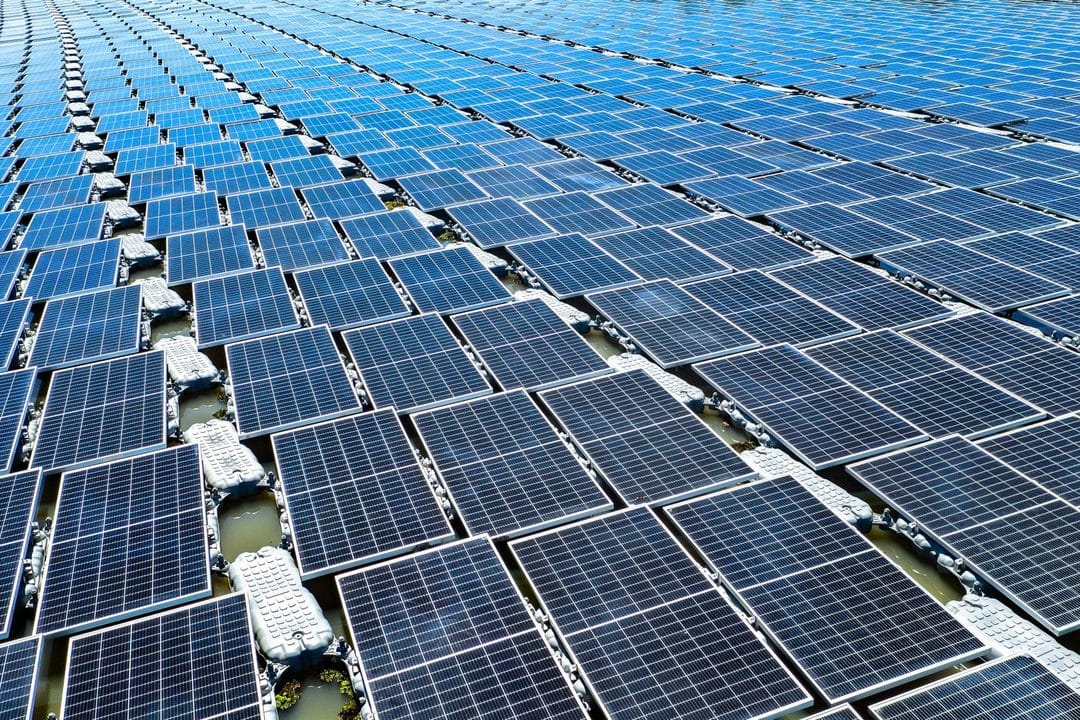
Across South and Southeast Asia, a growing share of new solar capacity is no longer being built on the ground. Instead, panels are being mounted on pontoons and floated across the surface of reservoirs, irrigation ponds and hydropower lakes. The shift, often described as floating photovoltaics, reflects a basic constraint shaping the region's energy transition: usable flat land is scarce, expensive and frequently contested.
Why water surfaces are becoming attractive
In densely populated economies, large ground-mounted solar farms compete directly with farmland, forestry and urban expansion. Reservoirs behind existing dams offer an alternative footprint that requires no new land acquisition and sits close to grid connections already built for hydropower.
Engineers also point to a secondary benefit. Panels floating on water tend to run cooler than those installed over hot ground, and lower operating temperatures generally improve electricity output. The water surface beneath the array is partly shaded, which can reduce evaporation losses, a meaningful consideration for reservoirs that double as drinking-water or irrigation sources.
Pairing solar with existing hydropower
One of the most discussed configurations places floating arrays on the same reservoirs that feed hydroelectric turbines. The two technologies complement each other in a practical way. Solar generation peaks during clear daytime hours, while stored water can be released to generate power in the evening or during cloudy spells.
- Shared transmission lines reduce the cost of connecting new capacity.
- Hydropower can smooth the variability that solar introduces into the grid.
- Reservoir operators gain a second revenue stream from surface area that was otherwise idle.
This hybrid approach has drawn particular interest in mountainous areas where large dams already exist but additional flat land for solar is limited. By layering generation onto infrastructure that has already been paid for, planners can add capacity without the lengthy permitting that greenfield projects usually demand.
Engineering and environmental questions
Floating installations are not without complications. Anchoring systems must withstand fluctuating water levels, wind loading and, in some regions, seasonal monsoon conditions. Maintenance crews need boats and specialised access procedures, and electrical components require careful waterproofing and corrosion protection. Cables that run from the water to the shore are a recurring point of failure if they are not designed for constant movement.
Ecologists have raised questions about how large floating arrays affect the water bodies they cover. Reduced sunlight reaching the surface can alter oxygen levels and aquatic plant growth. Researchers studying these effects generally recommend covering only a portion of any single reservoir and monitoring water quality over time rather than assuming the impact is negligible.
Balancing competing uses
Many of the reservoirs being considered serve multiple purposes at once, supplying irrigation, supporting fisheries and providing flood control. Adding power generation to that list means coordinating among agencies that have not traditionally worked together, and resolving who is responsible for maintenance, liability and decommissioning at the end of a project's life. In several countries these institutional questions have proven harder to settle than the engineering itself.
Manufacturing and cost trends
The economics have shifted as the specialised floats, mooring lines and marine-grade hardware that the format requires have become more widely produced. Earlier projects often relied on imported components, but a broader supplier base has narrowed the cost gap with conventional ground-mounted systems. That said, floating arrays still carry a premium tied to their structural and access requirements, and the case for building them rests largely on the value of the land they avoid using.
A measured outlook
Floating solar still represents a small fraction of total installed capacity across Asia, and ground-mounted and rooftop systems remain the dominant formats. But in places where land is the binding constraint rather than sunlight or capital, water surfaces have moved from novelty to a serious planning option.
The technology is unlikely to replace conventional solar so much as extend where it can be built. For governments trying to expand clean electricity without displacing agriculture or forests, the calm surface of an existing reservoir increasingly looks like one of the few remaining easy places to put a panel.