Asia's Sustainable Aviation Fuel Mandates Collide With a Supply Gap as Singapore, Japan and Korea Move First
Singapore's SAF levy took effect this year, with Japan and South Korea close behind. The mandates are landing well ahead of the region's ability to produce the fuel.
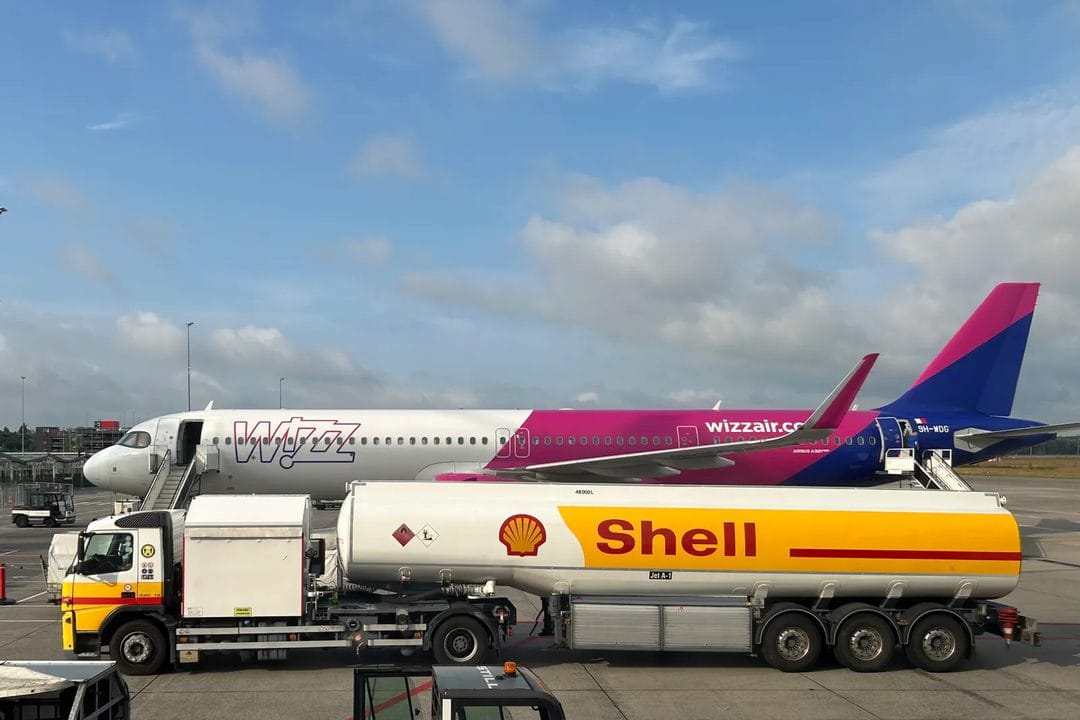
Singapore's Changi Airport began requiring a share of sustainable aviation fuel on all departing flights in January 2026, funded through a per-ticket levy the Civil Aviation Authority of Singapore introduced the previous year. The move made Singapore the first Southeast Asian hub to mandate SAF blending, and it has been followed within months by firmer commitments from Japan and South Korea. All three governments now have blending targets tied to specific years — 2030 for Japan, 2027 for South Korea's first mandatory phase — but the fuel itself is in short supply.
According to figures the International Air Transport Association has cited from regional refiners, SAF accounted for well under 1% of total jet fuel use across Asia-Pacific in 2025. Singapore's initial blending requirement was set deliberately low, at 1%, precisely because domestic and regional supply could not support more. Japan's Ministry of Land, Infrastructure, Transport and Tourism has set a considerably more ambitious target — 10% SAF blending by 2030 — a level that would require production capacity several multiples of what currently exists anywhere in the region.
Singapore's levy model, and why other hubs are watching it
The Singapore levy adds a fixed surcharge to outbound tickets, scaled by cabin class and flight distance, with proceeds used to subsidise the price gap between SAF and conventional jet fuel. Regulators in Seoul and Tokyo have studied the mechanism closely because it solves a problem that mandates alone do not: airlines can be required to use SAF, but if the fuel costs two to five times more than kerosene, someone has to absorb that difference or pass it through.
South Korea's Ministry of Land, Infrastructure and Transport confirmed in late 2025 that its own mandate, covering flights departing Incheon and Gimpo, will start at a 1% blending requirement in 2027 before stepping up on a schedule still being finalised with domestic refiners SK Energy and GS Caltex. Neither company has announced SAF production volumes large enough to cover Korean Air's and Asiana's combined fuel consumption at even the initial 1% threshold, which is one reason the 2027 date has already slipped once from an original 2026 proposal.
Where the fuel is actually supposed to come from
Neste, the Finnish renewable fuels producer, operates the largest SAF-capable refinery in the region at its Tuas facility in Singapore, with output the company has said can reach 1 million tonnes of SAF annually when the plant runs at full renewable-fuel capacity — shared with its renewable diesel lines. That single site currently accounts for a disproportionate share of Asia-Pacific's entire SAF output. Japan's ENEOS and Idemitsu Kosan have both announced SAF production units at existing refineries, with ENEOS targeting first output from its Osaka-area facility, but neither has reached commercial-scale production as of mid-2026.
The gap between mandate volumes and refinery output is the central problem regional aviation regulators have not yet solved. Changi Airport Group's own fuel suppliers have said publicly that meeting Singapore's 1% requirement this year depends partly on imported SAF, not fuel refined domestically — an arrangement that works while the requirement stays at 1%, but becomes considerably harder as Japan's 10% target approaches 2030.
Feedstock: the quieter fight
Most SAF produced today is made from used cooking oil and other waste fats, not from purpose-grown crops, because that pathway (known as HEFA, or hydroprocessed esters and fatty acids) is the only one operating at meaningful commercial scale. That has turned used cooking oil into a contested commodity. China, Indonesia and Malaysia are among the world's largest exporters of used cooking oil, and for years most of it moved to Europe, where the European Union's ReFuelEU Aviation regulation has required a 2% SAF blend since 2025, rising to 6% by 2030.
European refiners, paying a premium to secure feedstock ahead of their own rising mandates, have absorbed much of the used cooking oil that Asian SAF producers now need for domestic supply. Indonesian biofuel producers have raised the issue directly with trade officials, arguing that a resource collected inside the region is being priced out of reach by buyers in a different regulatory market. The result is that Singapore, Japan and South Korea are each building SAF mandates on a feedstock base that is simultaneously being drawn toward Rotterdam and Amsterdam refineries paying European carbon-compliance prices.
Some producers are shifting toward agricultural residues and non-food feedstocks to sidestep the used cooking oil bottleneck, though those pathways remain further from commercial scale and carry their own certification hurdles under the CORSIA sustainability framework that most Asian carriers use to verify SAF eligibility.
What it means for fares
Singapore Airlines, Japan Airlines, ANA and Korean Air have each disclosed SAF purchase agreements running into the low hundreds of thousands of tonnes over multi-year terms, well below what would be needed to cover their networks at the blending percentages now being written into law. Airline finance officers interviewed by regional trade press have put the SAF cost premium at two to five times conventional jet fuel, depending on feedstock and production route, with the gap narrowing slowly as HEFA capacity expands.
Singapore's levy structure means passengers on flights departing Changi already carry part of that cost directly, itemised on the ticket rather than folded into the base fare. Japanese and Korean carriers have both signalled that a similar surcharge model, rather than fully absorbing SAF costs into ticket prices without disclosure, is the most likely approach as their own mandates take effect — a preference regulators in both countries have not yet confirmed in final rulemaking.
The supply chain race now underway
Airports and airlines across the region are moving to lock in supply ahead of the steeper mandate years. Changi Airport Group has signed offtake agreements extending through 2030, Haneda and Narita are working with Japanese trading houses Mitsubishi Corporation and Itochu on SAF import contracts from producers in the United States and Europe, and Incheon International Airport has opened discussions with GS Caltex on dedicated SAF blending infrastructure that would allow Korean-refined SAF to reach aircraft without first routing through export terminals.
None of these projects will close the production gap before the mandates that motivated them take full effect. Japan's 10% target for 2030 remains the most exposed: unless ENEOS, Idemitsu Kosan and new entrants bring several new HEFA units online on schedule, most of the SAF Japanese carriers use to meet that requirement will likely still be imported, at a premium, from producers in Singapore, the United States and Europe — the same suppliers Korean and Singaporean carriers are also competing to secure fuel from.
The rest of the region is watching, not mandating — yet
China, the world's second-largest aviation market, has so far avoided a binding blending mandate, relying instead on voluntary targets under its civil aviation administration's five-year plan and on state-backed refiners such as Sinopec, which opened a 100,000-tonne SAF unit in Zhenhai in 2024. Chinese producers have become major exporters of SAF and SAF feedstock to Europe rather than priority suppliers of their home market, a pattern regional trade officials say mirrors what is happening with used cooking oil more broadly.
Thailand and Vietnam, both expanding aviation hubs, have signalled interest in SAF frameworks without committing to dates, and officials from both countries have said any domestic mandate would likely follow — rather than lead — whatever supply chain Singapore, Japan and South Korea manage to establish over the next several years. That leaves the three first-moving markets absorbing the early cost and infrastructure risk that later adopters will be able to route around.