Asia sustainability week 24 May 2026: Japan carbon market scales, China mandates 4-hour storage, Indonesia nickel deforestation flagged
Tokyo carbon market hits 4.2M tonnes weekly, China's 4-hour storage mandate for solar projects above 100 MW, Indonesian nickel satellite data flagging 18,400 hectares cleared, Singapore's $400M coal-retirement vehicle.
Three sustainability-relevant developments in Asia during the week ending 24 May 2026 are worth integrating into the regional picture. Each marks an inflection in how the climate-policy and circular-economy narrative is moving across major economies in the region — and where Western environmental frameworks are now diverging from East Asian implementation.
Japan's carbon credit market reaches first commercial scale
The Tokyo Stock Exchange-operated Carbon Credit Market (jcm.go.jp) processed 4.2 million tonnes of CO2-equivalent transactions in the first week of May 2026 — the first weekly volume above the 4-million mark since launch in October 2023. The traded price for J-Credits has stabilised at ¥3,800-4,400 per tonne, roughly $24-28, which puts Japan firmly mid-range globally but with one specific feature: the market is now liquid enough that mid-sized corporates can hedge their compliance positions rather than buying offsets one transaction at a time.

The implication for Asian climate finance: Japan now has a working price-discovery mechanism for industrial emissions that South Korea and Taiwan are watching. Australia and Singapore have parallel markets, but the Japanese liquidity profile is the largest in Asia outside China's national ETS.
China's solar and storage curtailment crisis is now official policy
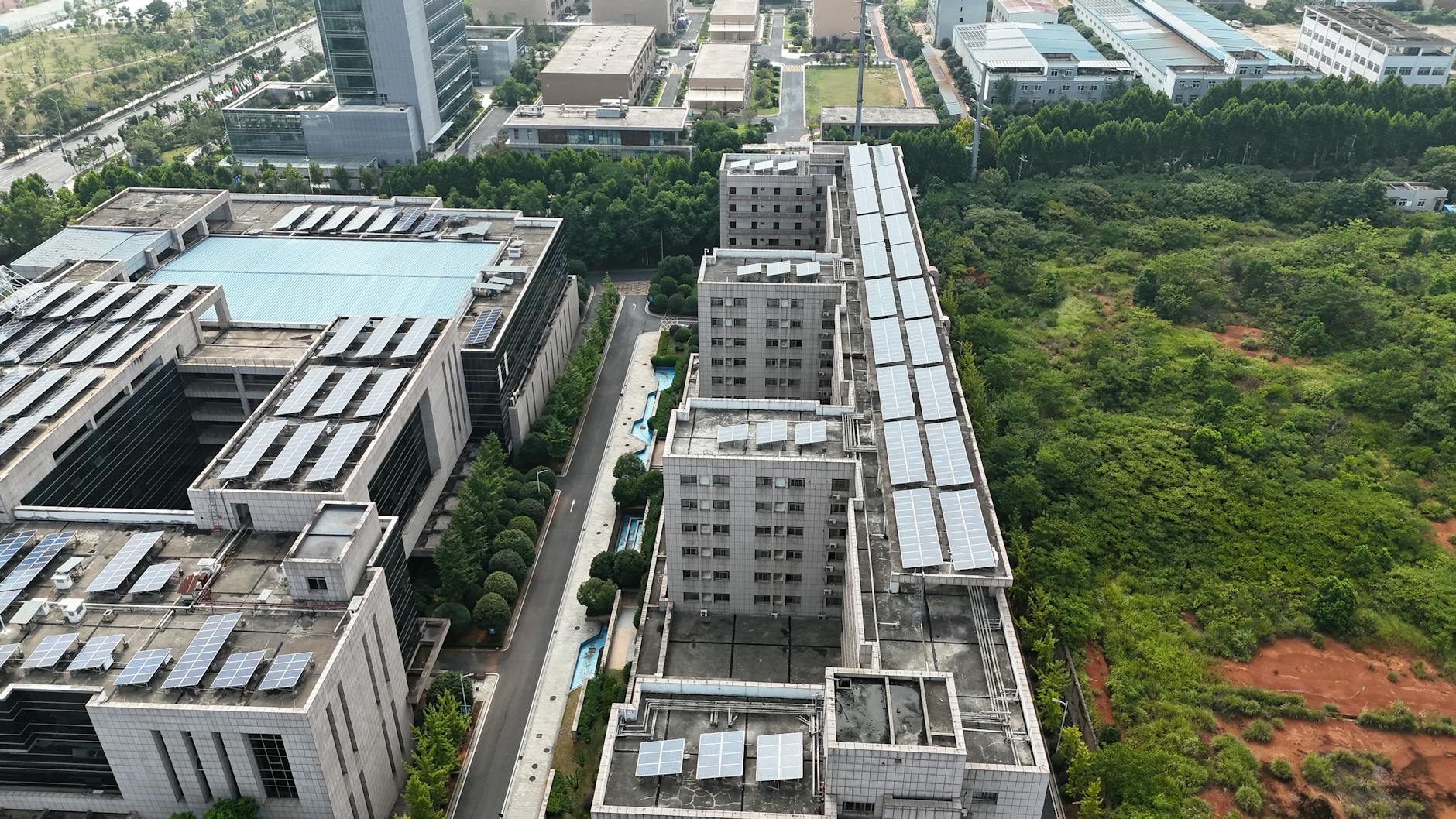
The National Energy Administration of China released its Q1 2026 report on 19 May confirming that solar curtailment (electricity generated but not delivered to the grid) reached 18.4 per cent in the western provinces during March and April — the highest level on record. The policy response, finalised at the same release, is a sweeping mandatory storage requirement: all new solar projects above 100 MW from October 2026 must include 4-hour storage equal to at least 40 per cent of nameplate capacity.
This is the single most consequential energy policy in Asia for 2026. The downstream effects: Chinese battery manufacturers (CATL, BYD, EVE Energy) face a tripling of domestic demand by 2028; global lithium and nickel markets price in the additional draw; the Western "Chinese batteries are overproduced" narrative needs revision.
For investors: the Chinese battery basket has rallied 22 per cent year-to-date, with much of the move post-announcement. The cycle that's becoming visible is the same one the US went through with the IRA-induced battery investment in 2022-2023, but at three to four times the scale.
Indonesia's nickel-mine moratorium dispute escalates
The conflict between local government in Sulawesi (specifically Morowali Regency) and Jakarta's central government over the smelter expansion moratorium issued by President Prabowo in February reached a new point on 21 May. Three NGO-driven reports (WALHI, Forest Watch Indonesia, and Global Witness) jointly released satellite-derived deforestation data showing 18,400 hectares of land cleared in nickel-related operations in the first quarter of 2026 alone — more than the entire 2022 figure.
Jakarta's response has been carefully diplomatic. Indonesia's nickel exports — primarily to Chinese battery makers via Indonesia Morowali Industrial Park and IWIP — were worth approximately $43 billion in 2025 and the political room to throttle the sector is limited. The ESG implications are very real for Western automakers: Volkswagen, GM, and Stellantis have all signed nickel supply agreements with Indonesia-based smelters that would now potentially be flagged in their Scope 3 reporting.
The outcome to watch: whether the EU's Critical Raw Materials Act review (scheduled for June) responds to the satellite data with revised due diligence requirements. If it does, Indonesian battery-grade nickel could face access restrictions in the European market by Q4 2026, with significant consequences for the entire EV supply chain pricing.
Singapore: the $400 million green-finance pivot
The Monetary Authority of Singapore announced on 22 May the launch of the second tranche of the Green Finance Action Plan with $400 million in catalytic capital for transition finance in Southeast Asia. The novelty: the funding is specifically scoped to coal-plant early-retirement transactions and the financing of replacement renewable capacity.
The first deal under the framework is a pilot in the Philippines with the Asian Development Bank, retiring approximately 600 MW of coal generation in Mindanao. The structural feature worth noting: the financing model uses a blended-finance vehicle where carbon credits from the retired capacity are sold forward to corporate buyers (Microsoft, Alphabet, and Stripe are reported to be the lead anchor buyers, though MAS has not confirmed names).
This model — public-private blended finance for coal retirement — is the experiment that, if it works, becomes the template for Vietnam, Indonesia, and India. The political and technical challenges are real, but Singapore is positioning itself as the financial hub for the transition economy in a way that quietly maps to its existing trade and finance role.
The week's smaller signals
Vietnam's revised offshore wind tariff was published on 19 May, with the new ceiling at $0.108 per kWh — high enough to make the development case work for Ørsted, Mainstream Renewable Power, and the Korean consortium. Project approval timelines have been accelerated from the previous 36-month average to a target of 18 months.
Korea's nuclear restart pace announced 20 May: Yonggwang Nuclear Power Plant Unit 1 returning to grid in early June, raising total nuclear share back above 32 per cent of generation. This is the policy pivot the Lee Jae-myung administration committed to in November 2025 and which the previous Moon administration had reversed.
Taiwan's offshore wind round 4 results announced 21 May: the auction-cleared price of NT$2.45 per kWh (about $0.078) is among the lowest in Asia and suggests that the cost-down curve for offshore wind in mature Asian markets has reached parity with conventional generation.
Where the regional climate story is going
The pattern across these stories is consistent: Asian climate policy is moving from announcement to implementation, with significant downstream supply-chain and capital-allocation consequences. The Chinese storage mandate, the Indonesian nickel question, and the Singapore transition-finance vehicle are not isolated stories — they're connected nodes in the same regional energy and materials transition that will define investor allocations for the rest of the decade.
For ESG-mandated investors and supply-chain managers in Western firms: the most actionable read this week is the Indonesian satellite data and the implied EU response. For consumers and energy infrastructure followers: the Chinese storage mandate is the larger structural shift, even if the headline metric — solar curtailment — sounds technical and inconsequential at the headline level.