Japan Restarts Two Nuclear Reactors Under New Safety Standards
Japan restarts Takahama reactors 3 and 4 after $1.8 billion in safety upgrades, bringing the active nuclear fleet to 14 units.
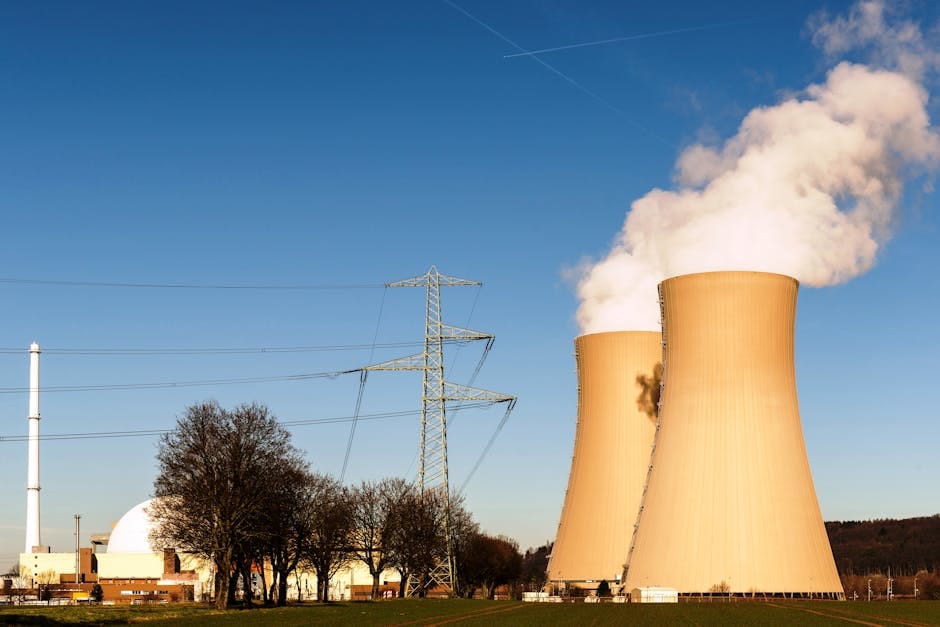
Japan Restarts Two Nuclear Reactors Under New Safety Standards
Japan's Nuclear Regulation Authority granted operational clearance for two pressurized water reactors at the Takahama plant in Fukui Prefecture on November 3, 2025. Units 3 and 4, each rated at 870 MW, resumed commercial operations after completing $1.8 billion in post-Fukushima safety upgrades.
The restarts bring Japan's active nuclear fleet to 14 reactors, up from zero in 2013 when all units were offline following the 2011 Fukushima disaster.
Safety Enhancements
Kansai Electric Power, the plant operator, installed reinforced seawalls capable of withstanding 12-meter tsunamis, filtered containment venting systems, and mobile emergency power units. Seismic resilience was upgraded to handle ground accelerations of 700 gal, roughly double the original design specification.
"Every reactor restart in Japan sets a new benchmark for nuclear safety," said Toichi Sakata, chairman of the Nuclear Regulation Authority. "The post-Fukushima standards are among the strictest globally."
Energy Security Context
Japan imported 93% of its primary energy in 2024, spending $172 billion on fossil fuel imports. Nuclear power provided just 8.5% of electricity generation, down from 30% before 2011. The government's 2030 energy plan calls for nuclear to supply 20-22% of generation.
The Takahama restarts will displace approximately 3.8 million tons of CO2 annually from natural gas and coal-fired generation, according to the Institute of Energy Economics, Japan.
Public Opinion
National polls show the public remains split, with 48% supporting reactor restarts as a climate and energy security measure and 44% opposed due to safety concerns. Communities near nuclear plants have negotiated enhanced compensation packages, with Fukui Prefecture receiving $120 million annually in hosting subsidies.
Anti-nuclear groups in Osaka and Kyoto organized protests involving an estimated 8,000 participants on the restart date.
Future Outlook
Applications for restart are pending for nine additional reactors across six sites. Japan is also exploring construction of next-generation reactors, with Mitsubishi Heavy Industries developing a small modular reactor design targeted for deployment by 2035.
The government has signaled that extending the operational lifespan of existing reactors beyond 60 years will be considered on a case-by-case basis, a policy shift that could keep the current fleet running through mid-century.