Urban Heat Islands Across Asia: How Cities Are Measuring and Addressing the Temperature Gap
Tokyo, Singapore, Seoul, and Chinese pilot cities are measuring and acting on urban heat island effects — a local temperature problem distinct from global warming that worsens as cities expand regardless of emissions trajectories.
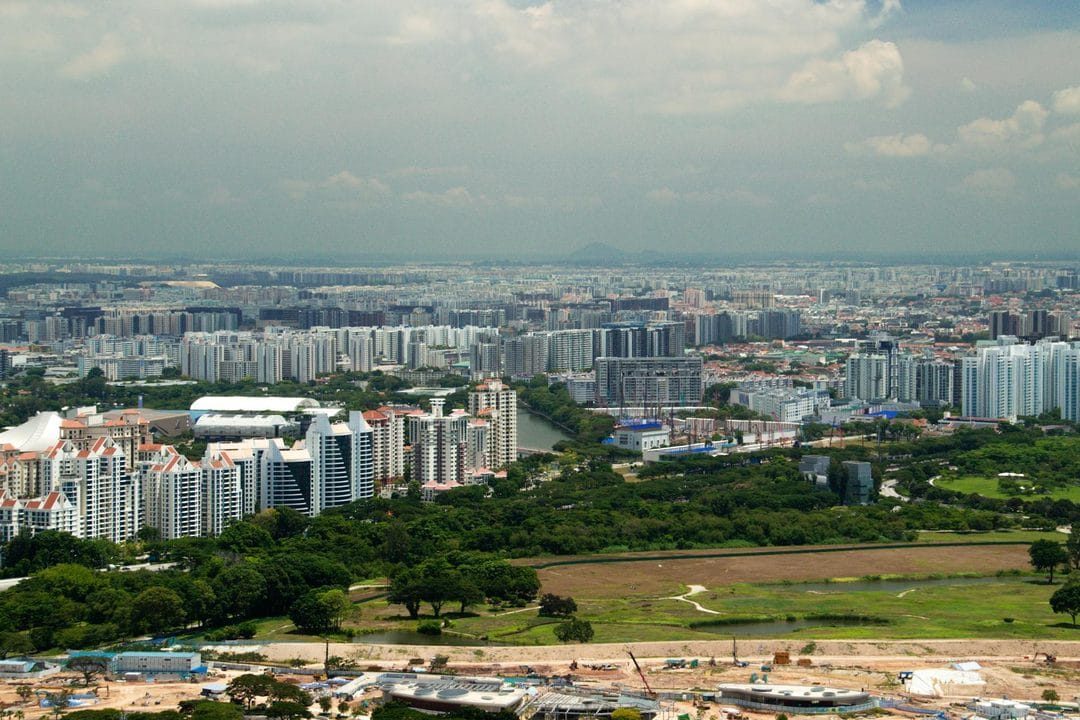
A Climate Effect That Worsens Independently of Global Warming
Urban heat islands — the phenomenon where dense, impervious city surfaces absorb and retain heat, raising local temperatures several degrees above surrounding rural areas — are increasingly the subject of government policy across Asia. The effect is distinct from broader climate warming: a city can become significantly hotter relative to its surroundings even in years without anomalous global temperatures, simply through continued expansion of paved surfaces, building density, and the waste heat released by air conditioning units running to cope with the heat already produced.
In Tokyo, long-term weather records show that the city's average summer temperature has risen by roughly 2.5 degrees Celsius over the past century, a rate of increase faster than the global average and attributable in large part to urban expansion rather than greenhouse gas warming alone. Singapore's Centre for Climate Research has documented similar local intensification, with the urban core registering temperatures measurably above the island's forested reserves. Bangkok's urban heat effect is compounded by the city's flat topology and the near-total absence of tree canopy in many central districts.
Measurement Frameworks in Japan and South Korea
Japan has operated a structured heat island monitoring network since 2003, coordinated through the Ministry of the Environment's Heat Island Countermeasures Promotion Programme. The network tracks urban-rural temperature differentials at hundreds of monitoring stations across major metropolitan areas and publishes annual data that city planners use to target interventions. Tokyo's metropolitan government has since 2001 required cool-roof specifications on new large buildings — surfaces with solar reflectance above 60% — and has mandated permeable pavement on new public road projects to reduce surface heat retention.
South Korea's Ministry of Environment launched a national heat island monitoring system in 2016 that uses a combination of fixed weather stations, satellite land-surface temperature data, and mobile measurement units to produce heat maps at the district level for Seoul and eight other major cities. The data is publicly accessible and has been used to prioritise tree-planting and green infrastructure budgets in districts showing the most severe urban-rural differentials.
Seoul has invested heavily in stream restoration as a heat mitigation strategy. The Cheonggyecheon stream, restored in 2005 after decades as a covered highway, has been measured as reducing air temperatures by 3.6 degrees Celsius within 200 metres of the waterway during peak summer periods, according to Seoul Metropolitan Government monitoring data. The city has since expanded restoration projects along secondary streams with similar temperature-reduction objectives.
Singapore's Green Canopy Strategy
Singapore's approach to urban heat management has been embedded in its urban planning since the late 1990s, when the government began requiring green buffer zones along major roads and mandatory sky-rise greenery for large new developments above a certain plot ratio. The Urban Redevelopment Authority's Landscaping for Urban Spaces and High-Rises programme — known as LUSH — has since evolved through several iterations, with the current version requiring developers to replace greenery lost to development footprint with an equivalent area of rooftop, sky terrace, or vertical greenery.
The National Parks Board's Tree Conservation policy protects mature trees above a specified trunk girth and requires replacement planting when trees are removed for development. Singapore's urban tree canopy cover has remained stable at around 29% of the island's total land area through a period of significant development expansion — an outcome that urban planners elsewhere in Southeast Asia, where tree canopy tends to decline as cities densify, have studied as a reference case.
Singapore's Centre for Climate Research projects that without mitigation, the urban heat island effect could add 4 to 6 degrees Celsius to urban temperatures by 2100 on top of global warming. The city-state's Cool Towns programme, launched in 2022, targets a reduction in urban heat island intensity of at least 2 degrees Celsius across key areas by 2030 through a combination of increased greenery, cool-paint requirements, and district cooling networks.
China's Sponge Cities and Their Mixed Record
China's Sponge City programme, launched in 2015, aimed to redesign urban drainage infrastructure to allow cities to absorb, store, and slowly release rainwater rather than channelling it rapidly into rivers and sewers. The stated goals included flood reduction, groundwater recharge, and — through permeable surfaces and increased urban wetlands — heat island mitigation.
The programme's results have been contested. Independent evaluations, including a 2023 analysis published in Nature Cities, found that while some pilot cities showed measurable improvements in flood retention, the heat reduction effects were inconsistent, partly because tree planting and vegetation restoration — the elements most directly linked to cooling — received less funding than engineering infrastructure. Cities that prioritised green corridors and wetland restoration alongside permeable paving showed better cooling outcomes than those focused primarily on underground cisterns and drainage redesign.
Wuhan, one of the programme's first pilot cities, experienced severe flooding in 2016 despite years of sponge city investment, prompting a reassessment of how the programme's goals were being operationalised. The lessons have influenced subsequent urban greening programmes to place stronger emphasis on above-ground vegetation and direct shading.
The Economics of Urban Cooling
Urban heat island mitigation competes with other municipal priorities for funding, and the economic case has become easier to make as researchers have quantified the direct costs of heat. A 2024 Asian Development Bank analysis of six Asian cities estimated that heat-related productivity losses — workers in outdoor and poorly cooled indoor occupations becoming less efficient or absent during peak heat periods — represented between 0.4% and 1.2% of urban GDP annually, depending on the city's industrial composition and existing cooling infrastructure.
Healthcare costs provide a separate accounting. Hospital admissions and mortality data from Tokyo, Osaka, Seoul, and Bangkok consistently show peaks during heat wave periods, with elderly and lower-income populations in poorly ventilated housing disproportionately represented. The cost of emergency medical response during heat events is now factored into some municipal climate adaptation budgets as a direct argument for preventive infrastructure spending.
Analysts tracking green infrastructure investment across Asia note that the commercial real estate sector has begun incorporating urban heat data into valuation models, particularly in cities where disclosure of climate-related risks is being formalised through regulatory frameworks. Properties in districts with lower measured heat island intensity — more tree cover, lower albedo surfaces, proximity to water — are beginning to carry measurable price premiums in markets including Singapore and Seoul.