Asia's E-Waste Economy: The Urban Mine Caught Between Informal Workshops and Formal Recyclers
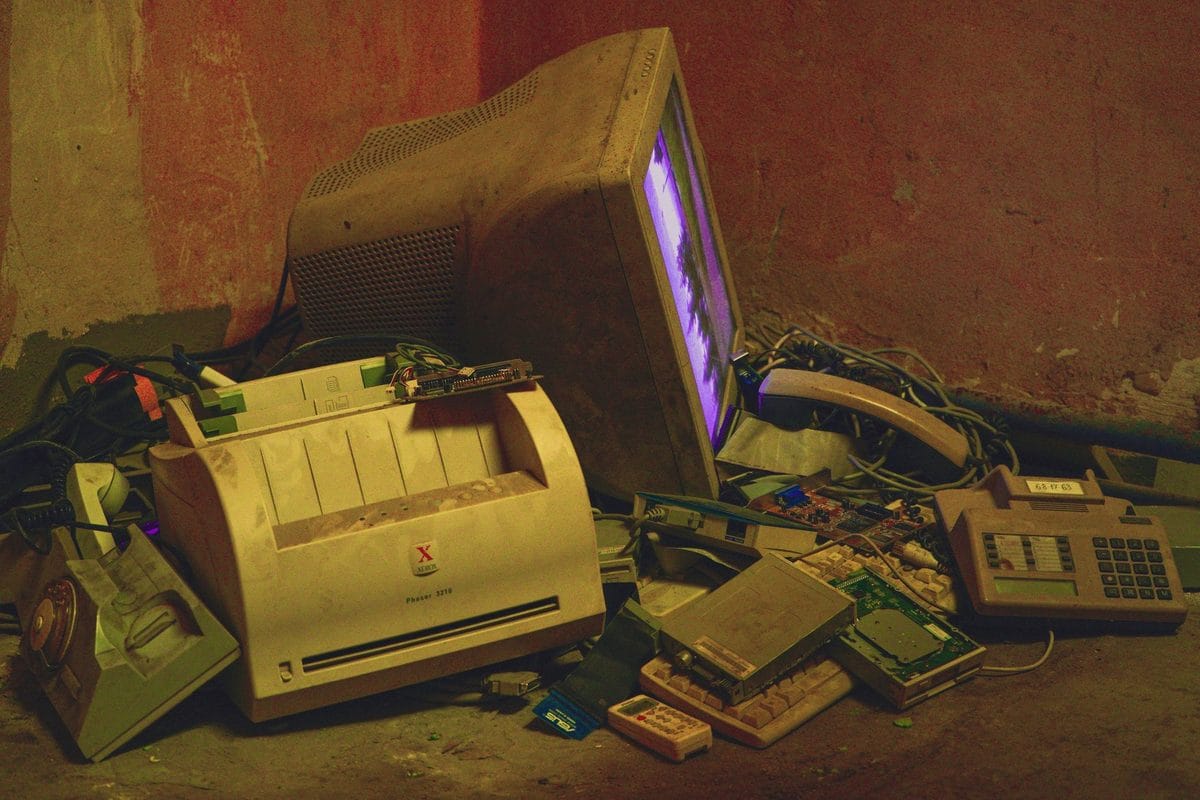
Asia generates more electronic waste than any other region on earth, a direct consequence of being both the world's factory and one of its fastest-growing consumer markets. The United Nations' Global E-waste Monitor has tracked the trend for years, and its figures put Asia's share of discarded phones, laptops, screens and appliances at close to half the global total. The harder question is what happens to that material after it is thrown away — and the answer splits sharply between a formal recycling industry that is finally maturing and an informal sector that still handles the majority of the flow.
The economic logic is straightforward. A tonne of discarded circuit boards contains more gold than a tonne of mined ore, alongside copper, palladium, silver and the rare earths packed into magnets and screens. Recovering those metals is now described as urban mining, and as primary ore grades decline and supply chains for critical minerals tighten, the value locked in old electronics has stopped looking like garbage and started looking like a reserve.
The informal sector still dominates
Most of Asia's e-waste is dismantled by hand, outside any regulated facility. Workshops across South and Southeast Asia strip devices for parts and metals using methods that are efficient at recovery but hazardous at every other level — open burning of cables to expose copper, acid baths to leach gold, and direct exposure to lead, mercury and brominated flame retardants.
The pattern repeats across several hubs:
- Guiyu in southern China, long the most-cited example, which authorities have spent years trying to consolidate into a regulated industrial park after decades of contamination.
- Informal clusters around major South Asian cities, where tens of thousands of workers process imported and domestic waste with minimal protection.
- Transboundary flows that persist despite the Basel Convention's controls on hazardous-waste shipments, often disguised as second-hand goods.
Formalising this sector is not simply a matter of banning it. The informal recyclers achieve high recovery rates and employ large numbers of people, which means a credible transition has to absorb both the labour and the material rather than push them further underground.
Where policy is moving
Extended producer responsibility is the mechanism most governments are now reaching for. The principle makes manufacturers financially responsible for collecting and recycling what they sell, and versions of it are in force or being expanded across the region. Japan's framework, built around its Home Appliance Recycling Law and a separate small-electronics law, is among the longer-running models, channelling devices through registered collection points.
South Korea operates one of the more developed systems through its dedicated recycling centres, and India has tightened its E-Waste Management Rules with recycling targets that ratchet up over time. The shared challenge is enforcement: a producer-responsibility rule only works if collection actually reaches the recyclers, and across much of the region the informal channel still offers consumers a faster, simpler way to offload an old phone.
The mineral angle changes the stakes
What is shifting the conversation is the demand for the materials themselves. Electric vehicles, grid batteries and renewable hardware need copper, lithium, cobalt and rare earths in quantities that strain primary supply, and recovering those from end-of-life electronics reduces dependence on a small set of producing countries. That reframes recycling from an environmental obligation into a supply-security strategy.
Several operators are building large-scale recovery plants aimed at battery and electronics waste, betting that recovered metals will be cost-competitive with mined material as collection systems mature. The constraint is feedstock — a high-throughput plant needs a steady, sorted stream of waste, and that stream still has to be wrestled away from the informal sector that currently captures it. The metal is there. The question across Asia is who gets to recover it, and under what conditions.