China Completes World's Longest Ultra-High-Voltage Green Power Line
China energizes a 3,300-km UHVDC line transmitting 12 GW of renewable power from Xinjiang to Hunan, displacing 40 million tons of coal annually.
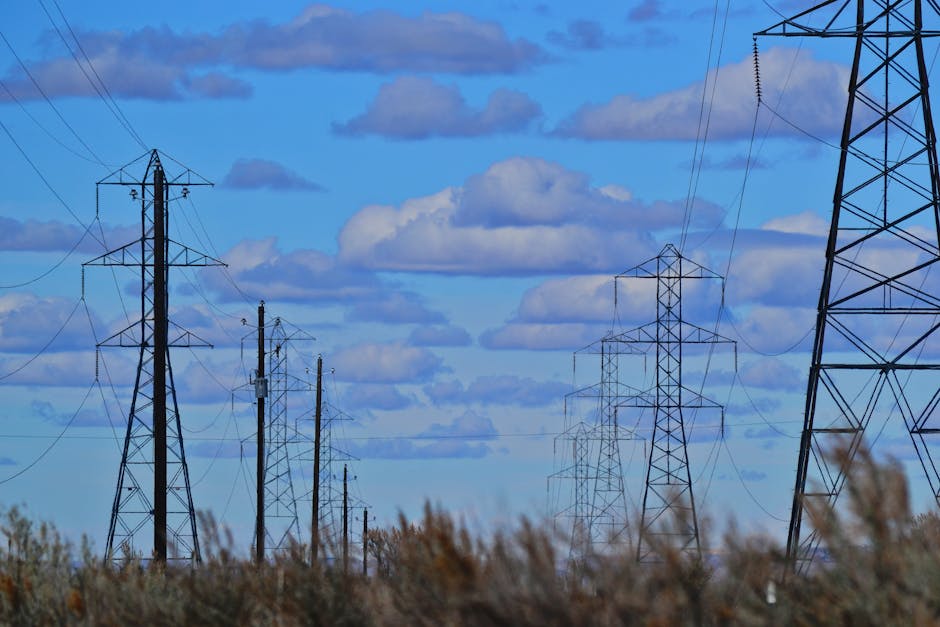
China Completes World's Longest Ultra-High-Voltage Green Power Line
China's State Grid Corporation energized the 3,300-kilometer Hami-Changsha ultra-high-voltage direct current (UHVDC) transmission line on February 25, 2026. The line transmits 12 GW of renewable electricity from wind and solar farms in Xinjiang to industrial consumers in Hunan province, replacing 40 million tons of coal annually.
The $8.5 billion project is the longest and highest-capacity power transmission line ever built.
Technical Specifications
The line operates at 1,100 kV DC, the highest commercial voltage in the world. At this voltage, transmission losses over 3,300 kilometers are kept below 5%, compared to 15-20% for conventional high-voltage AC systems over equivalent distances.
The line connects directly to 20 GW of wind and 15 GW of solar generation capacity in the Hami region, where land is abundant but local electricity demand is minimal. A 6 GWh battery storage facility at the sending end smooths output variability.
Strategic Significance
"China's UHVDC technology solves the fundamental mismatch between where renewable energy is generated and where it is consumed," said Lin Boqiang, dean of the China Institute for Energy Policy Studies at Xiamen University. "Western provinces have the resources; eastern provinces have the demand. UHVDC bridges the gap."
The Hami-Changsha line can supply 8% of Hunan province's total electricity demand, reducing the province's coal consumption by 15% and carbon emissions by a comparable amount.
Supply Chain Impact
The project required 280,000 tons of aluminum conductors, 4,500 transmission towers, and 850,000 ceramic insulators, all manufactured domestically. China now dominates global UHVDC technology, with State Grid and China Southern Grid having built 35 UHVDC lines domestically and exported the technology to Brazil, Pakistan, and Ethiopia.
Total investment in China's UHVDC network exceeds $60 billion since the first line was commissioned in 2009.
Climate Impact
Replacing 40 million tons of coal annually prevents approximately 100 million tons of CO2 emissions, equivalent to the annual output of Belgium. The line also eliminates significant quantities of sulfur dioxide, nitrogen oxides, and particulate matter from coal combustion in Hunan.
China plans an additional eight UHVDC lines by 2030, connecting Gobi Desert renewable zones to eastern population centers and forming the backbone of a national grid capable of operating on 50% renewable electricity.