Vietnam Doubles Rooftop Solar Export Cap, Opens Direct Power Deals to Data Centres
Decree 243/2026/ND-CP raises Vietnam's rooftop solar export cap from 20% to 50% and lets data centres buy renewable power directly, as EVN warns of cost-shifting risk.
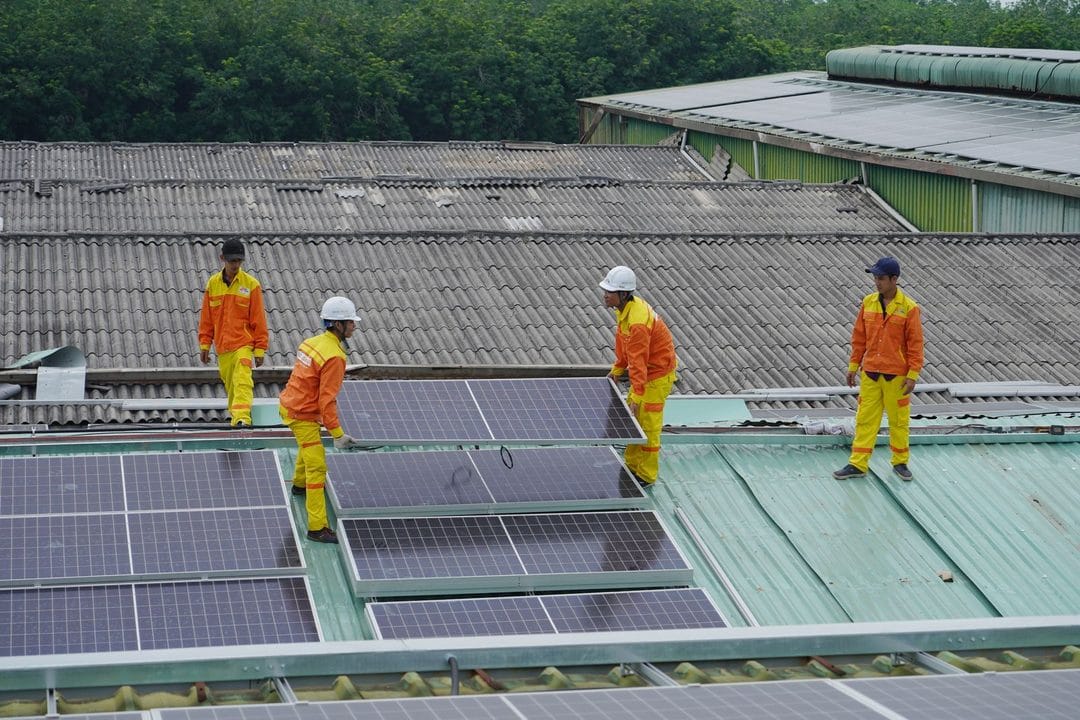
Vietnam's government has doubled the cap on rooftop solar electricity that households and businesses can export to the national grid, raising the threshold from 20 percent to 50 percent of installed capacity under Decree 243/2026/ND-CP, which took effect on 26 June 2026. The decree also formally opens Vietnam's direct power purchase agreement (DPPA) framework to data centre operators and electric-vehicle charging infrastructure for the first time, expanding a mechanism that previously excluded them.
The change amends two earlier regulations, Decree 57/2025/ND-CP governing DPPA transactions and Decree 58/2025/ND-CP covering self-produced and self-consumed power. According to Norton Rose Fulbright's summary of the decree, stakeholders can negotiate export ratios above 50 percent through late 2030 provided the regional grid meets safety standards, while rooftop solar systems in mountainous, border and island areas that are not connected to the national grid face no export limit at all.
Data centres added as eligible buyers
Decree 243 expands the list of entities permitted to buy power directly from renewable generators to include data centre operators, large electricity consumers running EV charging infrastructure, and electricity retailers operating inside industrial parks and clusters. The previous consumption and voltage thresholds that restricted which buyers could participate in DPPA transactions have been removed, according to a client alert published by Baker McKenzie in June.
The decree also introduces an aggregation model under which a single licensed electricity retailer inside an industrial park can purchase power from a renewable energy developer and redistribute it to multiple tenant factories, rather than requiring each factory to sign its own separate agreement. Tariff caps that previously applied to physical DPPA transactions and to the sale of surplus rooftop solar output have been removed as well, allowing buyers and sellers to negotiate pricing directly.
EVN flags cost-shifting risk
Phạm Lê Phú, deputy general director of state utility Vietnam Electricity (EVN), said the decree creates a clearer legal framework for households, businesses and investors seeking access to renewable power, according to Vietnamese state media. At the same time, EVN has warned that expanding DPPA participation to third-party electricity retailers could shift grid-maintenance costs onto other users who are not part of those transactions.
The Ministry of Industry and Trade is separately working on amendments to the national Electricity Law intended to formalize how that cost allocation is handled, according to reporting from Reccessary. Under the current pricing structure, surplus rooftop solar power sold back to EVN is compensated at the previous year's average electricity price — a rate that industry participants have said does not reflect current generation costs and discourages further private investment in rooftop capacity.
Grid operator response in the north
The Northern Power Corporation (EVNNPC), which distributes electricity across 17 northern provinces and cities outside Hanoi, reported adding roughly 8,500 new self-produced and self-consumed rooftop solar customers with a combined capacity of nearly 394.5 megawatts during the first half of 2026. By the end of June, the utility's total rooftop solar customer base had passed 10,000 connections, with combined capacity of approximately 718 megawatts.
To manage the additional variable load on its distribution network, EVNNPC is installing battery energy storage systems at 110-kilovolt substations. The first phase of that programme covers 47 substations and will add 305 megawatts of storage capacity with 610 megawatt-hours of energy storage, intended to smooth load management as rooftop solar connections continue to rise.
Part of a wider regional push
The Vietnamese decree lands amid broader momentum in Southeast Asia's power sector this year. Singapore's Energy Market Authority granted conditional approval in early August for Sembcorp Industries and Malaysian developer Southern Solar Alliance to import renewable electricity from Malaysia, according to Reccessary. Thailand's National Energy Policy Council approved a separate 2,000-megawatt direct power purchase agreement pilot for data centres in June 2024, with the Energy Regulatory Commission subsequently consulting on draft rules and a Third Party Access Code; the scheme was scheduled to take effect in January 2026, though eligibility remains restricted to hyperscale facilities meeting a 50-megawatt minimum IT load and holding Board of Investment promotion status.
As of July 2026, final implementing rules for Thailand's pilot were still being finalized, according to Reccessary, underscoring a gap between policy approval and contract-ready regulation that has also shaped early implementation of Vietnam's Decree 243.
A World Bank report published this year, titled "Green Horizon: East Asia's Sustainable Energy Future," found that decarbonizing the power and industrial sectors — which together account for an estimated 75 to 87 percent of the region's emissions — represents the primary pathway for East Asian economies to secure affordable energy while meeting rising demand. Regional electricity demand has been climbing in part due to data centre and AI infrastructure buildout, which analysts at E3G said this month is placing Asia at the center of the global energy transition over the coming decade.
Not every rooftop system qualifies
The higher export ceiling does not apply uniformly. Some rooftop solar installations remain subject to a "zero-export" requirement under the decree, meaning generated electricity cannot be fed into the grid at all regardless of the new 50 percent cap, depending on local grid conditions and the specific connection agreement in place. Electricity retailers and renewable energy generators covered by the decree are required to invest in metering equipment and data collection, monitoring and control systems before they can participate in the expanded framework, a compliance cost that falls on project developers rather than on EVN.
Data centre growth adds pressure to the timeline
The push to open DPPA access to data centres comes as Asia-Pacific is on track to become the world's largest data centre market before 2030, according to industry estimates cited by E3G, with AI-related computing infrastructure and semiconductor expansion adding new load to power grids across Southeast Asia faster than regulators had planned for when the original DPPA framework was drafted in 2025. The World Bank's "Green Horizon" report found that decarbonizing the power and industrial sectors — which together account for an estimated 75 to 87 percent of East Asia's emissions — represents the region's primary pathway to securing affordable energy while accommodating that rising demand, citing the region's largely untapped renewable resource base as a comparative advantage against economies still reliant on imported fossil fuels.
Implementation of Decree 243 continues at the provincial level, with metering, monitoring and control system requirements for electricity retailers and renewable generators still being rolled out under the new framework.