Southeast Asia's 49 GW Gas Pipeline Would Cost $45 Billion More Than Solar, Analysis Finds, as Turbine Gaps and LNG Prices Bite
Five Southeast Asian economies have about 49 GW of gas plants under construction or in pre-construction. Zero Carbon Analytics says solar could generate the same power for $45.4 billion less, while Wood Mackenzie expects turbine gaps to limit delivery.
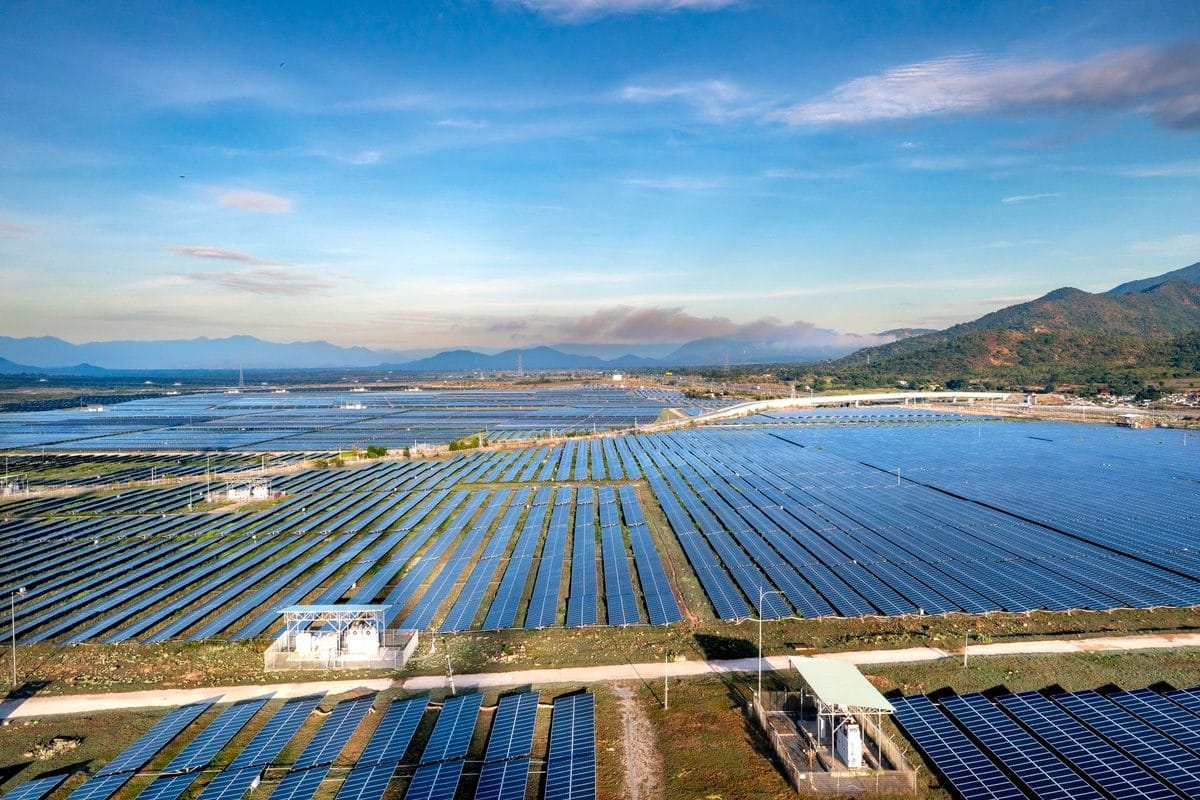
Five Southeast Asian economies have roughly 49 gigawatts (GW) of new gas-fired power plants under construction or in pre-construction, and producing the same electricity from solar would cost about $45.4 billion less, according to a Zero Carbon Analytics (ZCA) briefing published on September 30. The analysis by ZCA researcher Yusun Chin covers Indonesia, Malaysia, the Philippines, Thailand and Vietnam, and takes its pipeline figures from Global Energy Monitor's Global Oil and Gas Plant Tracker.
If every plant were built, the 49 GW could generate about 263 terawatt-hours a year, ZCA calculated by applying each country's gas capacity factor. ZCA corrected the percentage comparisons in the cost section of the briefing on October 7, and the figures below follow the corrected text.
What the ZCA comparison shows
Vietnam accounts for most of the pipeline at about 34.5 GW, which ZCA says would be a 380% increase on the country's 2025 installed gas capacity. Malaysia follows with 9.6 GW, a 53% rise on its existing base.
ZCA compared the levelized cost of electricity (LCOE), the break-even price per megawatt-hour over a plant's lifetime, using International Energy Agency data for Indonesia and BloombergNEF country reports for the other four markets. On that measure solar was cheaper than gas in all five countries in 2025, by an average of 40%, and the gap is projected to widen to 59% by 2030. The Philippines showed the largest difference in 2025, at $99 per megawatt-hour for gas against $54 for solar, or around 45% cheaper.
The authors list the limits of the method themselves. The calculation leaves out grid integration and storage costs, and for Vietnam it relies on 2023 LCOE data because nothing more recent was publicly available.
Targets run far ahead of what can be built
Wood Mackenzie counted a different pipeline in a report released on August 4: about 53 GW of gas-fired capacity that governments in six major Southeast Asian markets are targeting by 2030. The consultancy expects only 14.9 GW to reach commercial operation by then, and says just 11 GW of the planned pipeline has secured gas turbines. Projects still without turbines are likely to face lead times of at least five years.
"The challenge today is not planning power projects but executing them," said Alvin Tan, a Southeast Asia power and renewables research analyst at Wood Mackenzie. Indonesia has secured turbine supply for only 200 megawatts of its 8.4 GW pipeline, the lowest share among the markets analyzed, the report said.
| Market | Government target or requirement by 2030 (GW) | Wood Mackenzie forecast (GW) |
|---|---|---|
| Vietnam | 29.4 | 3.7 |
| Malaysia | about 9.4 | 5.9 |
| Philippines | about 2 | 0.4 |
| Thailand | 1.4 | 0.5 |
Wood Mackenzie does not argue that gas is on its way out. It projects Southeast Asian electricity demand to grow 2.4-fold by 2050 and gas demand from the power sector to more than double between 2026 and 2050. The region would become a net gas importer by 2033, with LNG supplying more than 80% of regional gas demand by mid-century. In Malaysia, it forecasts 5.9 GW of new capacity against a requirement of about 9.4 GW, a gap it said underscores "the continued need for new-build gas capacity to meet future demand and maintain system reliability." The Philippines, where the Luzon and Visayas grids went on red alert at the same time in May 2026, expects 0.4 GW of new gas against a target of about 2 GW.
An LNG price shock and one scrapped plant
Vingroup, Vietnam's largest company by market capitalization, told the government on March 25 that it wanted to drop a planned 4.8 GW LNG-fired plant in Haiphong, Reuters reported on March 31, citing a document it had seen. The company pointed to "the significant risk of high fuel prices for LNG power projects." Reuters reported that LNG prices had risen 85% since the Feb. 28 U.S. and Israeli strikes on Iran, which closed the Strait of Hormuz to most ships; the strait normally carries about a fifth of global LNG supplies. Damage to liquefaction trains in Qatar, the report added, has sidelined 12.8 million tons a year of capacity for three to five years.
At full output the plant would have needed about 5 million metric tons of LNG a year, with an annual import value of $3.5 billion to $3.8 billion, which Vingroup said would "create significant pressure on the economy's foreign exchange needs." The company proposed a hybrid renewable and battery storage project instead. It put the cost at around $25 billion, nearly five times that of the LNG plant, and said the option would be a valid alternative if equipped with appropriate transmission infrastructure, while urging the ministry to consider a "suitable electricity pricing mechanism." Vingroup declined to comment to Reuters, and Vietnam's industry ministry did not respond.
Prices have not settled. ZCA, citing Japan-Korea Marker futures, put Asian LNG at $23.5 per million British thermal units on August 24, a 119% rise from the day before the war. On October 6, European and Asian gas prices moved higher again as Iranian attacks on commercial shipping in the Strait of Hormuz continued, NGI reported.
Governments and buyers adjust
Thailand, which generates more than 60% of its electricity from natural gas, most of it imported, plans to raise its clean-power target to 60% within 25 years, double the previous goal, Energy Minister Akanat Promphan said in an interview on August 26, as reported by Bloomberg. Renewables supply about 15% of the current mix. "The ongoing conflict in the Middle East demonstrates that we must urgently reduce imports of LNG (liquefied natural gas) and other fuels," he said. The updated power plan, due in October, will include nuclear energy for the first time.
The Philippines said earlier this year that it would speed up the commissioning of 22 renewable projects totaling 1.47 GW, according to the Institute for Energy Economics and Financial Analysis (IEEFA). Technology companies have been signing direct supply contracts for clean power, ZCA noted. Google agreed with TotalEnergies in December 2025 to buy 1 terawatt-hour of solar for its Malaysian data centers, Microsoft signed a 10-year, 200 MW renewable supply deal with state utility PLN in Indonesia in February, and Samsung Electronics agreed in June to buy 70 GWh of solar in Vietnam, the country's first grid-based direct power purchase agreement.
The import-bill argument
A separate IEEFA briefing, published on September 29, frames the choice in terms of foreign exchange. Southeast Asia's energy import bill was $82 billion in 2024 and could reach $245 billion by 2035 under the IEA's current-policies scenario, IEEFA wrote, citing the agency's Southeast Asia Energy Outlook 2026. The Middle East supplies 60% of the region's crude oil imports and one-third of its gas imports, according to the IEA.
The five countries' combined targets call for 450 GW of new solar and wind by 2035. IEEFA estimates the buildout would cost $288 billion, including $170 billion in imported equipment, and that each year's additions would displace about 17% of power-sector fuel imports and save around $8.2 billion in foreign exchange. Cumulative savings would pass the equipment import bill by the end of the fifth year, the authors calculated.
Thailand last revised its 25-year power plan in 2023, before the Iran war and the artificial intelligence boom, Bloomberg noted. The update is due this month.