Ulaanbaatar Opens Its Heating Season With Imported Coal and a Gas Pilot
Ulaanbaatar heats ger homes with imported coal this winter, plus a gas pilot for 5,000 households. UNDP and city data behind the 2026 season.
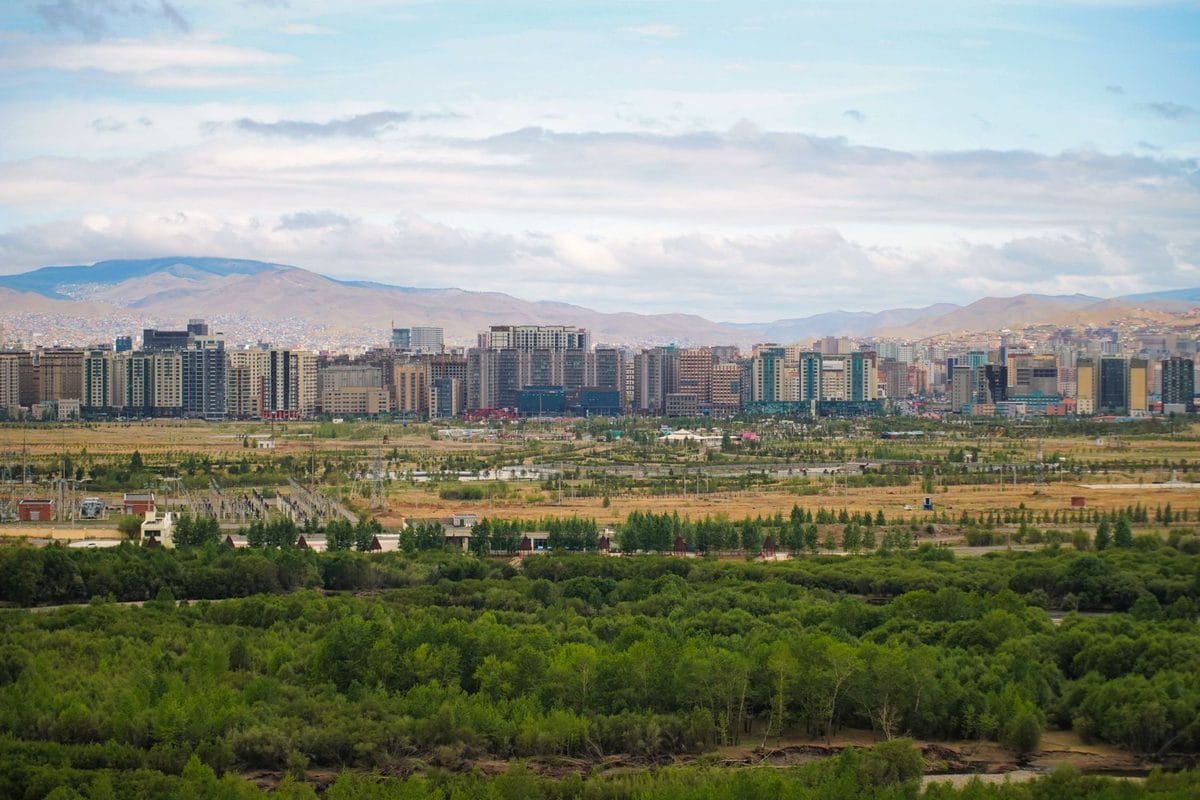
Ulaanbaatar's heating season was set to begin on September 15. The city administration has built this winter's fuel supply around coal imported from China, a pilot that moves 5,000 ger-district households to gas, and a domestic coal-processing plant that will not open until spring 2028. The measures were laid out at a briefing reported by the open.kg news agency on September 9, 2026, a few months after IQAir ranked the Mongolian capital the most polluted major city in the world on May 21.
Why winter smoke remains a capital problem
IQAir, which publishes real-time and historical air-quality data, recorded an AQI of 200 in Ulaanbaatar on the evening of May 21, 2026, a level its scale classes as unhealthy. IQAir itself notes that air quality changes quickly, so a single evening reading is a snapshot rather than a trend. It cites vehicle emissions and the city's valley geography among the causes of its poor air. The annual average is the steadier measure, and it is also poor. IQAir put the city's average PM2.5 concentration for 2025 at 17.9 micrograms per cubic metre, an AQI of 63, which it describes as about 3.5 times the WHO annual guideline of 5 micrograms.
The source of most of the winter problem is not disputed. In a press release dated August 24, 2026, the UN Development Programme (UNDP) said that more than 60 percent of Ulaanbaatar's winter air pollution originates from coal burning in ger-district households. The ger districts surround the city centre, and most of their homes are heated by stoves.
Imported coal fills a domestic gap
Mongolia has coal reserves, but according to the city briefing the country lacks the technology to produce semi-coke, a processed fuel the city supplies to ger-district residents. The administration said coal would therefore be imported from China for this winter. On August 6 it decided to build a coal processing plant in the Baganuur area, with production scheduled to begin in spring 2028, a step it said would reduce costs and keep capital inside the country.
Supply itself has been a problem. The administration said residents had complained about underweight packages and shortages. The city's answer is a mobile application called Khotula, which tracks fuel stocks and sales so that suppliers can be held to account. Officials also reported that domestic production of improved fuel had reached 1,400 tons a day, and that semi-coke would be sold at more than 450 specialised points across the city.
A gas pilot for 5,000 households
The most concrete change this season is the switch of 5,000 ger-district households to gas heating. According to the same briefing, 460 households in Ulaanbaatar already use renewable energy sources for heating. If the pilot works, the authorities plan to increase the number of gas-heated households two to three times next year. The reports reviewed for this article do not give a cost per household or a timetable for the remaining districts, so the scale of the next phase remains open. Any expansion will also depend on whether gas supply can be secured at a price the city can afford, a question the briefing did not address in the reports reviewed.
The gas switch sits alongside a wider national discussion. At a high-level dialogue held in Ulaanbaatar on August 24, titled "Mongolia's Path from Coal to Clean Heating Solutions in Ger Districts", government statements identified the energy transition as a national priority and the need for reliable heating in cold winters, according to the UNDP.
Financing: a solar facility and a Korean investment
The same August dialogue took place during the 17th Conference of the Parties to the UN Convention to Combat Desertification (UNCCD COP17). There, officials discussed a proposed Solar Facility Initiative. The UNDP describes it as a blended-finance mechanism that would combine public resources, private capital and international climate finance to bring clean heating to more than 10,000 households in the ger districts. The initiative is a proposal, and the UNDP release does not report that it has been approved.
The city briefing also referred to an agreement with the South Korean company GGI to move private homes to cleaner heating. According to the administration, an investment agreement worth $250 million is being prepared. No signed financing close was found in the sources reviewed for this article, so the figure should be read as a planned amount, not a committed one.
| Measure | Status reported | Source |
|---|---|---|
| Heating season start | Scheduled for September 15, 2026 | Ulaanbaatar city administration, via open.kg |
| Coal imports from China | Planned for this winter, as domestic semi-coke production is lacking | Ulaanbaatar city administration, via open.kg |
| Coal processing plant, Baganuur | Decision on August 6, production planned for spring 2028 | Ulaanbaatar city administration, via open.kg |
| Gas heating for ger households | 5,000 households this season, with a two to three times increase planned for next year | Ulaanbaatar city administration, via open.kg |
| Solar Facility Initiative | Proposed, aimed at more than 10,000 households | UNDP Mongolia press release, August 24, 2026 |
What to watch as the season deepens
Three points will show whether this winter's measures change the air. The first is the pollution record, which IQAir publishes and which will show whether the fuel controls reduce smoke in the coldest weeks. The second is the gas pilot, because the planned expansion depends on its results. The third is financing. The GGI investment and the Solar Facility Initiative would both need signed agreements before they could change how many homes switch fuels.
The coal import plan covers this winter only. The reports reviewed do not say how the city will cover its heating fuel between this season and the opening of the Baganuur plant in 2028. For ger-district residents, the practical test will be whether the fuel reaches the stoves in the quantities and quality the city has promised.