South Korea Unveils 55 GW Offshore Wind Roadmap After Record Auction, as China-Linked Turbine Deal Draws Scrutiny
South Korea's Ministry of Climate, Energy and Environment has published its first ten-year offshore wind tender roadmap, targeting 55 gigawatts of auctioned capacity by 2035, days after a record-competitive first-half 2026 auction and a turbine-sourcing dispute tied to China's Goldwind.
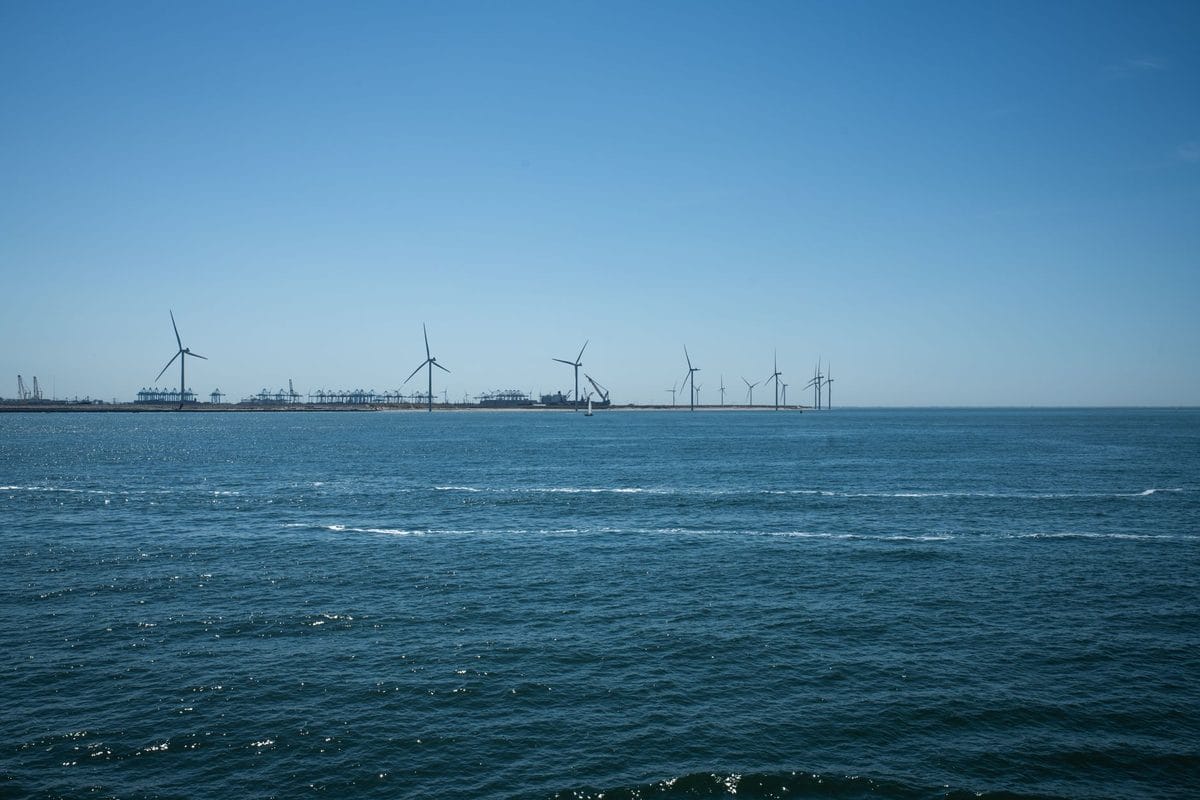
South Korea's Ministry of Climate, Energy and Environment and the state-run Korea Energy Agency published the country's first ten-year offshore wind tender roadmap on June 30, laying out plans to auction 55 gigawatts of capacity between now and 2035. Held at a KEPCO-hosted industry meeting in Seoul, the announcement followed the release of results from the first-half 2026 fixed-price competitive auction, in which developer bids exceeded selected capacity by more than two to one for the first time since the tender system began in 2022.
Nine projects bid for a combined 3,656 megawatts in the first-half round. Selected from that pool were five projects, totaling 1,786 megawatts. Fixed-bottom turbines accounted for the bulk of the winning capacity, while a single floating wind project returned to the selection list after being shut out entirely in 2025.
Fixed-Bottom Wind Outpaces Last Year's Total
Private-led fixed-bottom developers won three of the four projects they entered, taking 1,094 megawatts against a 1,598-megawatt pool of bids. Combined with a 160-megawatt public-led award, fixed-bottom selections reached 1,254 megawatts for the half-year — already above the 689 megawatts approved for all of 2025. Floating wind, dormant last year for lack of viable bids, returned with a single 532-megawatt award.
- Gulupdo Offshore Wind — 250 megawatts, backed by Daewoo Engineering & Construction and SK Group, will run Doosan Enerbility 10-megawatt turbines.
- Hanbit Offshore Wind — 340 megawatts, led by Myungwoon Industrial Development, plans to assemble 13.6-megawatt turbines under license from Germany's Vensys, a company that Chinese turbine maker Goldwind has majority-owned since 2008.
- Haesong 3 Offshore Wind — 504 megawatts, developed by Copenhagen Infrastructure Partners, will use Siemens Gamesa 14-megawatt turbines built at Doosan Enerbility's Changwon plant.
- Haeuli 2 Floating Offshore Wind — 532 megawatts, also under Copenhagen Infrastructure Partners, selected the same Siemens Gamesa 14-megawatt turbine.
- Geumodo, a 160-megawatt public-led project with DL E&C and Korea Midland Power, will install Doosan Enerbility's 10-megawatt-class units.
Every selected project submitted domestic supply chain plans covering substructures, cables, installation vessels, and construction work. Separately, the ministry said projects using 15-megawatt turbines — a class South Korea does not yet produce independently — filed commitments for local assembly and technology transfer rather than straightforward imports.
A Decade of Planned Auctions
Under the new roadmap, the ministry estimates roughly 65 gigawatts of project-development capacity will be eligible for tender by 2035, of which 55 gigawatts will actually go to auction. Climbing from 4 gigawatts in 2026 to 6 gigawatts by 2028 before settling into a range of 4 to 7 gigawatts through the following decade, annual volumes are set to exceed 4 gigawatts in most years. The government's targets call for 10.5 gigawatts of projects under construction by 2030 and 25 gigawatts of cumulative installed capacity by 2035.
Two bidding tracks will run through the decade. The first, in the fixed-price competitive format used since 2022, covers projects that already hold power generation licenses and continues through 2033. Alongside it, a second track covering competitive bidding for government-designated development zones under the Special Act on the Promotion of Offshore Wind Power Deployment and Industrial Development launches in 2029. Officials described the overlap as a deliberate transition meant to avoid disrupting a pipeline of projects already in permitting.
The next round, covering the second half of 2026, is expected to open around September following a bidder information session in August or September. Targeting 1.9 to 3.0 gigawatts of tendered capacity, the ministry is aiming for a bid-to-award ratio of roughly 2:1 to 3:1 — a repeat of the competitive dynamic seen in the first half of the year.
Price Caps and Contract Terms Under Review
Despite a roughly 3 percent cut to the ceiling price compared with the previous round, bidder interest still pushed fixed-bottom selections well past last year's total. The ministry attributed the result to expanding shared grid infrastructure, including Korea Electric Power Corporation's plans for consolidated grid connections in areas with dense turbine clusters and proposals to reuse the grid links of decommissioned coal plants for new offshore wind capacity.
Meanwhile, turbine scaling sits at the center of the government's cost-reduction strategy. The roadmap backs continued deployment of 15-megawatt-class machines in the near term, with commercialization of 20-megawatt-plus turbines targeted from 2034 to lift capacity factors toward the roughly 40 percent levels seen in European offshore wind markets. Separately, officials are reviewing whether to extend contract terms from 20 to 25 years and to shift toward an inflation-indexed pricing structure modeled on the United Kingdom's Contracts for Difference system, with a revised bidding framework due by the first half of 2027.
Turbine Sourcing Dispute Overshadows the Results
Hanbit Offshore Wind's selection drew the most attention of the five awards, and not for its size. Twice before, the project had failed in tender rounds, a result industry observers linked to its reliance on Chinese-made turbines. This time, Hanbit proposed a different route: its subsidiary Unison would assemble Vensys-licensed 13.6-megawatt turbines at a plant in Sacheon, framed by the developer as a domestic manufacturing and technology-transfer arrangement.
The framing has not settled the underlying objection. Though headquartered in Germany, Vensys has been majority-owned by China's Goldwind since 2008, and critics argue the assembly arrangement effectively opens Korean waters to Chinese turbine technology under a domestic-production label. One wind industry source told the outlet Chosun Biz that treating Vensys as anything other than a Chinese-controlled supplier "opened the door for Chinese turbines to be installed in South Korean waters simply because they are produced domestically." Other sources questioned why developers would keep paying for European turbines from Siemens or Vestas if a Chinese-linked alternative could clear the same cost bar.
The Ministry of Climate, Energy and Environment has not reversed the selection. It said it would tighten post-award compliance checks on domestic production, technology transfer, and certification commitments, and pursue security verification — in coordination with other government agencies — specifically for turbines and control systems, which it classified as security-sensitive components. Analysts tracking the sector noted that Shanghai Electric has separately been exploring entry into the Korean market, and several suggested the Hanbit precedent could make it harder for regulators to exclude similar Chinese-linked bids in future rounds on fairness grounds alone.
Renewable Portfolio Standard Set to End in 2027
The turbine dispute unfolded against a broader shift in how Korea pays for renewable power. In May, the National Assembly's relevant standing committee passed amendments to the Renewable Energy Act, setting up the retirement of the existing Renewable Portfolio Standard and its tradeable Renewable Energy Certificates. A long-term fixed-price contract system takes over on January 1, 2027, with capacity allocated through competitive bidding by generation source and a new preferential-price mechanism replacing the current SMP-plus-REC weighting formula.
Until then, auctions held through the second half of 2026 will proceed under the existing framework, and developers selected in rounds dating back to 2023 keep their REC eligibility regardless of when the new system takes effect. Deputy Minister of Climate Lee Ho-hyun said the ten-year volume schedule was intended to give developers, lenders, and supply chain firms a clearer basis for long-term planning. "We expect to enhance predictability and investment stability for project developers, financial institutions, and supply chain companies," Lee said, adding that the ministry would keep pursuing cost reductions tied to bidding scale as the program expands toward its 2035 targets.