South Korea's Steel Sector Commits to Hydrogen DRI With $14 Billion Pohang Plan
South Korea's three largest steelmakers committed on May 9 to 20 trillion won of hydrogen-based direct reduced iron capacity at Pohang and Dangjin by 2035, with first commercial HyREX in 2029.
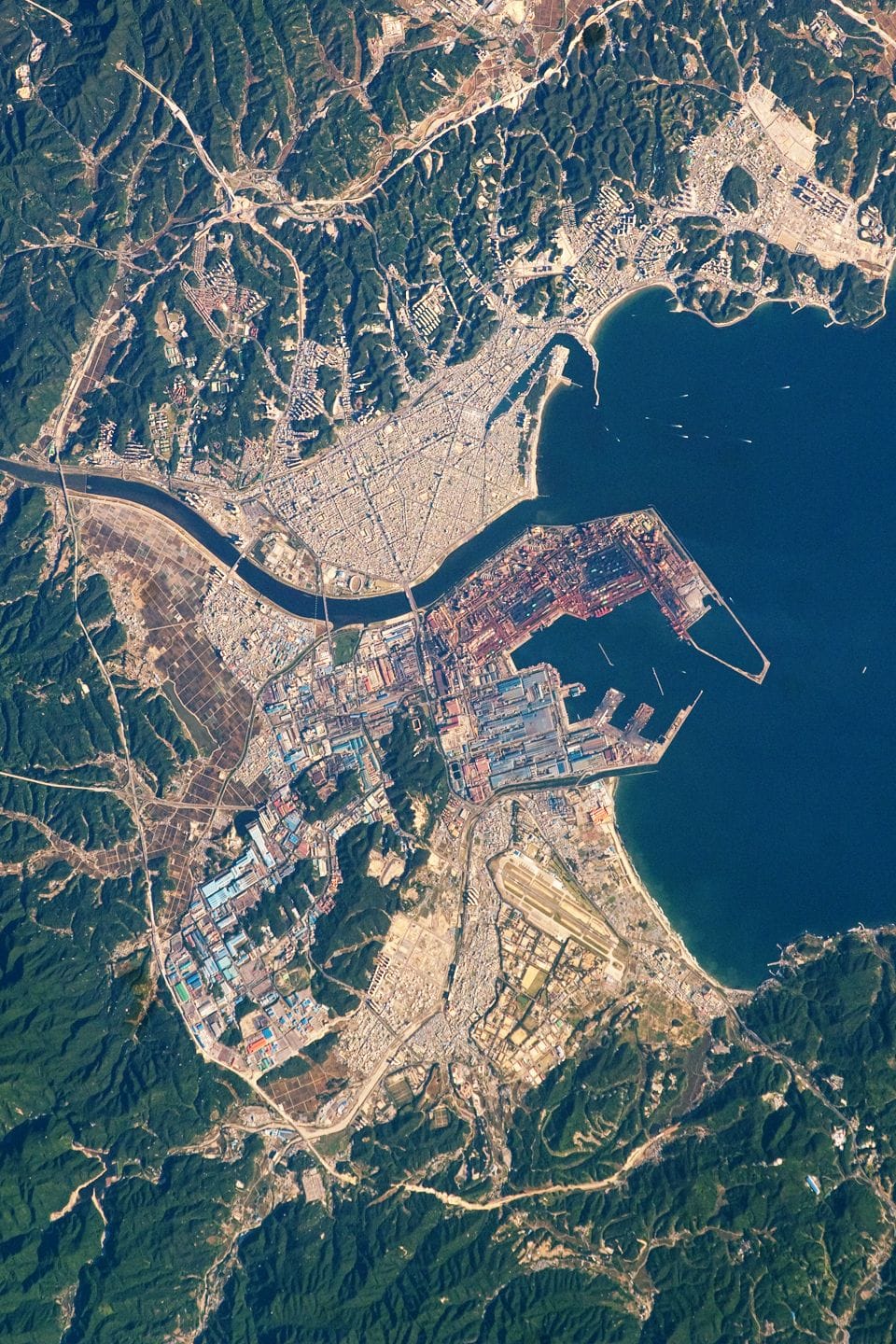
South Korea's three largest integrated steelmakers, POSCO, Hyundai Steel and Dongkuk Steel, jointly committed on May 9, 2026 to a phased transition of their Pohang and Dangjin sites to hydrogen-based direct reduced iron production. The combined capital plan, valued at 20 trillion won, or roughly 14 billion US dollars across 2026 to 2035, is the largest co-ordinated decarbonisation commitment ever made by Asian steel and will determine whether the country can plausibly hit its 2050 net zero pathway.
What the Three Steelmakers Are Buying
The plan replaces eight blast furnaces across two complexes with hydrogen-based direct reduction shafts feeding electric arc furnaces. POSCO will lead with its proprietary HyREX fluidised-bed reduction technology, which uses fine iron ore directly rather than the pelletised feed that conventional shaft reactors require. Hyundai Steel and Dongkuk will deploy a mix of HyREX and licensed Midrex shaft technology, depending on the site.
The first commercial scale HyREX module at Pohang is expected to enter operation in 2029, replacing the No. 2 blast furnace. Full retirement of conventional blast iron at Pohang and Dangjin is scheduled for 2034, with the last conventional unit decommissioned in early 2035.
The Hydrogen Question
The scheme works only if it has enough low-carbon hydrogen at a competitive price. South Korea is currently a small producer of green and blue hydrogen by global standards, and the steel sector alone would require roughly 4 million tons per year by 2035 to fully decarbonise the announced capacity. That demand is larger than the country's total announced green hydrogen production capacity for the same year.
To bridge the gap, the steelmakers have signed long-term offtake agreements with Australian and Middle Eastern green ammonia producers, with cracker capacity at the Yeosu and Ulsan ports being expanded to convert imported ammonia back to hydrogen. POSCO has also taken equity stakes in Western Australian green hydrogen developments at Pilbara and Esperance.
The Capital Plan in Numbers
- Total capex: 20 trillion won across 2026 to 2035
- POSCO share: 12 trillion won
- Hyundai Steel share: 5.5 trillion won
- Dongkuk Steel share: 2.5 trillion won
- Government green-transition subsidy commitment: 4.2 trillion won
- Expected emissions reduction: 41 million tons CO2 annually by 2035
Why It Matters Regionally
South Korea is the world's seventh-largest steel producer and the largest steel exporter in East Asia after China and Japan. Its emissions intensity per ton has been near the global average for decades, and the sector contributes roughly 14 percent of the country's total industrial emissions. A credible transition has been considered the single most important industrial-policy lever the country could pull on its net zero pathway.
The move also reshapes the Asian steel landscape. Japan's Nippon Steel and JFE have committed to broadly similar timelines but at lower volumes, and both have struggled to lock in long-term low-carbon hydrogen supply. Chinese producers Baowu, HBIS and Shagang have made similar announcements but with longer dates and more flexibility on transition fuels, including natural gas as a bridge.
Who Buys the Green Steel
The demand side is the part most observers underestimate. South Korean steel exports overwhelmingly serve automotive, shipbuilding, construction and home appliance markets. Hyundai Motor and Kia have publicly committed to green steel sourcing targets by 2030, as has Samsung Heavy Industries on the shipbuilding side. The European market, increasingly governed by CBAM, will reward low-carbon Korean steel with materially better economics than Chinese imports.
Singapore's announcement earlier in May that it will adopt its own border carbon mechanism by 2030, with cement and steel in the first wave, has further sharpened the export case. POSCO's chief sustainability officer told reporters at Pohang that the carbon price differential between conventional and HyREX steel becomes net-positive on a landed-cost basis in Europe by 2031, and in Singapore by 2032.
The Risks
Three risks dominate. First, hydrogen cost: if the delivered price of low-carbon hydrogen does not fall below 4 dollars per kilogram by 2030, the economic case becomes marginal. Second, electricity supply: HyREX-EAF flows consume more electricity than blast iron, and South Korea's grid will need substantial renewable build-out to keep pace. Third, technology risk on HyREX itself; the fluidised-bed approach has been demonstrated at pilot scale but never at the 2.5 million ton commercial scale planned for Pohang.
Workforce and Regional Transition
Pohang and Dangjin together employ roughly 38,000 steel workers, with multiples of that in supporting industries across the surrounding regions. The transition from blast iron to HyREX-EAF flows will change the skills mix significantly, with mechanical and process roles giving way to more electrical, control-systems and chemical engineering positions. The three companies have committed to a joint retraining programme for 12,000 affected workers, with the cost funded partly through the government's green transition fund and partly through the companies' existing skills budgets.
The regional impact is substantial. North Gyeongsang Province, home to Pohang, has tied a meaningful share of its economic development plan to the steel transition, with green-industry zones earmarked for hydrogen production, ammonia handling and battery materials adjacent to the existing steel complex. If the steel transition succeeds, Pohang has a credible pathway to remaining an industrial anchor through to the mid-century; if it stalls, the regional economy faces a structural challenge that few comparable Asian industrial regions have navigated cleanly.
What to Watch
The first commercial HyREX module commissioning in 2029 is the make-or-break milestone. If POSCO can demonstrate stable operation and acceptable economics at that scale, Asian steel decarbonisation will have its first proof point. If it slips, expect renewed pressure on government to extend the bridging role of natural gas-based DRI, and a softer net zero pathway across the region.