Japan's Carbon Market Turns Mandatory, Pressuring Asia's Industrial Giants
Japan's GX-ETS became mandatory for large emitters in FY2026, as China and South Korea tighten rival carbon pricing systems across the region.
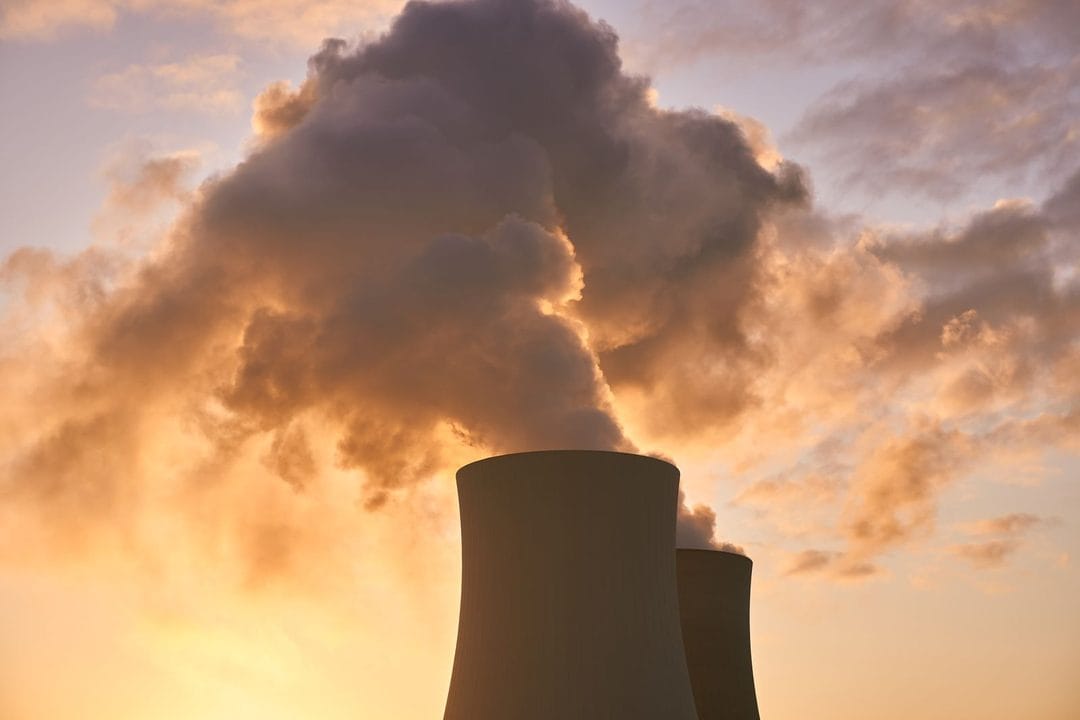
Japan's carbon market stopped being voluntary on 1 April 2026. Under the amended GX Promotion Act, passed by the Diet in May 2025, roughly 300 to 400 companies with average annual direct CO2 emissions of at least 100,000 tonnes over the 2023-2025 period are now legally required to participate in the GX-ETS, Japan's national emissions trading scheme. Together, they account for 50 to 60 percent of the country's total greenhouse gas output, concentrated in electricity, steel, automotive manufacturing and air travel.
The mechanism is a baseline-and-credit system rather than a hard cap-and-trade design. Each covered company receives an annual allowance; those that emit above it must buy allowances from companies that emit below theirs, with upper and lower price limits set by the government to contain volatility. Surplus allowances can be carried into the following year. A separate carbon levy, the GX Surcharge, is scheduled to apply to fossil fuel importers and domestic extractors starting in 2028, and auctioning for large power-sector emitters is due to begin in FY2033.
Earnings risk for steel and utilities
MSCI research published around the FY2026 transition estimated that if Japan's carbon price rose toward 70 US dollars per tonne — comparable to the EU Emissions Trading System — utilities and materials companies could see median earnings hit exceeding 10 percent. More than 700 firms took part in the voluntary phase of the GX-ETS between 2023 and 2026, covering over half of national emissions even before the mandate; the shift now removes the option to opt out for the largest emitters.
Japan is not moving in isolation. China's Ministry of Ecology and Environment confirmed in March 2025 that its national ETS, previously limited to the power sector, would expand to cover steel, cement and aluminium. Detailed allocation rules followed in November 2025, bringing an estimated 1,500 additional companies and roughly 3 billion tonnes of CO2-equivalent into the system. That expansion pushed the Chinese scheme's coverage of national emissions from about 40 percent to more than 60 percent, and regulators have pointed to the EU's Carbon Border Adjustment Mechanism, which starts pricing imported steel, cement and aluminium in 2026, as a direct driver of the timing.
South Korea sets its fourth phase
South Korea's K-ETS, running since 2015, already covers about 73.5 percent of the country's total emissions — among the highest coverage ratios of any mandatory carbon market globally. In November 2025, Seoul approved the allocation plan for the scheme's fourth phase, running 2026 through 2030, setting a total cap of 2.5 billion tonnes of CO2-equivalent and introducing a quantity-based market stability reserve alongside a higher share of auctioned allowances.
The three systems remain structurally different — Japan's baseline-and-credit model, China's intensity-based benchmarking during its current 2024-2026 phase, and South Korea's absolute cap with rising auction volumes — and none of them yet link prices or allowances with one another. For steelmakers, power generators and automakers operating across all three markets, that means tracking three separate compliance calendars, three sets of allocation rules and three exposure profiles heading into 2027, when China's ETS is due to shift from intensity-based to absolute-cap allocation.