India Commissions 5 GW Solar Park in Rajasthan Desert
India's largest solar park opens in Rajasthan's Thar Desert with 5 GW capacity, powering 3.7 million homes at record-low tariffs.
India Commissions 5 GW Solar Park in Rajasthan Desert
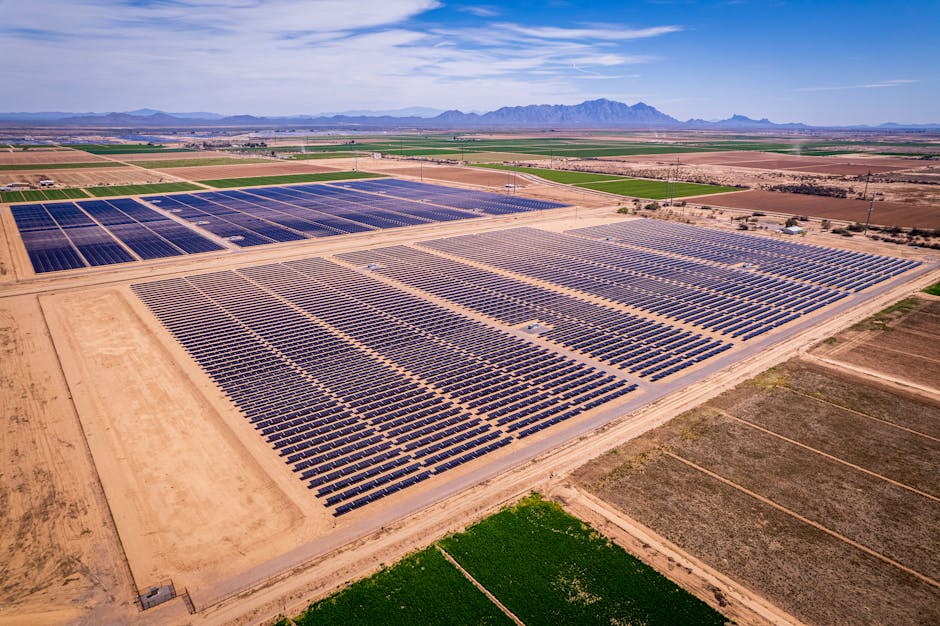
India's Ministry of New and Renewable Energy announced the full commissioning of a 5-gigawatt solar park in the Thar Desert region of Rajasthan on October 13, 2025. The facility, spread across 10,000 hectares, is now the largest single-site solar installation in South Asia.
The $3.2 billion project was developed by a consortium of NTPC, Adani Green Energy, and international partners over four years. At peak output, the park can power approximately 3.7 million households.
Scale and Technical Specifications
The solar park uses a combination of bifacial monocrystalline panels and single-axis tracking systems to maximize energy capture in the arid landscape. Module efficiency averages 22.5%, up from 18% in older Indian solar installations.
Water usage for panel cleaning has been reduced by 70% through robotic dry-cleaning systems, addressing a key criticism of large desert solar projects. The facility also incorporates 500 MW of battery storage to smooth output fluctuations.
Grid Integration Challenges
Connecting the park to India's national grid required 800 kilometers of new high-voltage transmission lines. The Power Grid Corporation of India invested $480 million in dedicated infrastructure, including two new substations.
"Grid integration remains the bottleneck for renewable expansion in India," said Priya Mehta, director of the Centre for Energy Policy Research in New Delhi. "Generation capacity is growing faster than transmission capacity."
Economic Impact
The project created an estimated 12,000 construction jobs over the build period and supports 1,500 permanent operational positions. Local communities in Jaisalmer and Barmer districts have reported increased economic activity.
Power purchase agreements lock in electricity prices at $0.028 per kilowatt-hour, among the lowest solar tariffs recorded globally. The competitive pricing could accelerate coal plant retirements across northern India.
India's Renewable Trajectory
India now has 185 GW of installed renewable capacity, putting it on track toward its 500 GW target by 2030. The Rajasthan project adds momentum to a sector that attracted $14.5 billion in investment during 2024.
The next phase of development will focus on hybrid solar-wind parks in Gujarat and Karnataka, where complementary weather patterns could boost capacity utilization above 35%.