Coral Bleaching Alert Issued for 80% of Southeast Asian Reefs
NOAA issues Level 2 coral bleaching alerts across 80% of Southeast Asian reefs as sea temperatures exceed bleaching thresholds for the second year running.
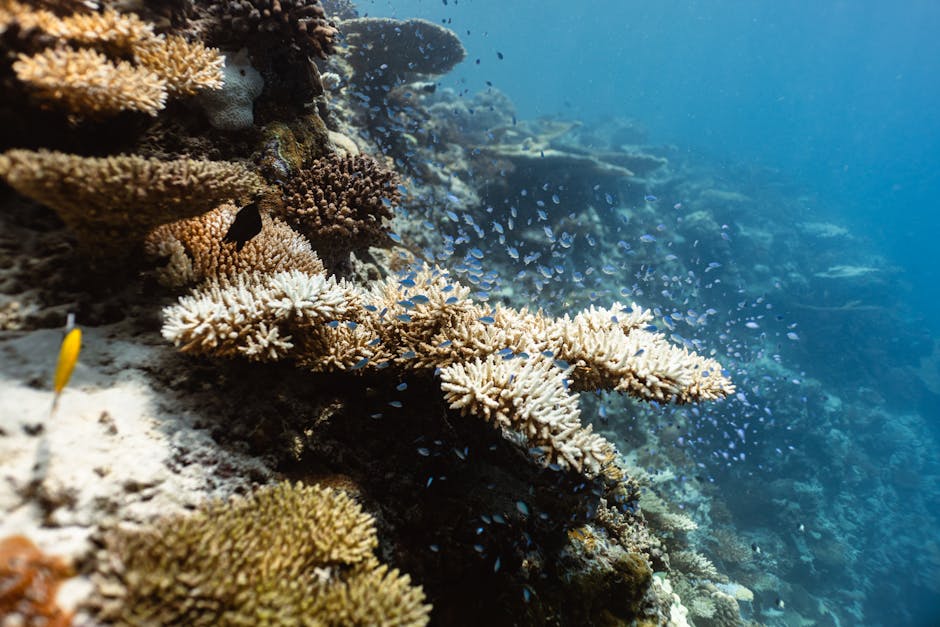
Coral Bleaching Alert Issued for 80% of Southeast Asian Reefs
The US National Oceanic and Atmospheric Administration issued a Level 2 coral bleaching alert for 80% of reefs across Southeast Asia on March 3, 2026. Sea surface temperatures in the Coral Triangle have averaged 1.5 degrees Celsius above the March historical mean for three consecutive weeks, exceeding the bleaching threshold for most coral species.
The event follows the 2024 global bleaching episode, making it the second mass bleaching in two years — a frequency that marine scientists say prevents recovery between events.
Affected Areas
Bleaching has been confirmed at monitoring sites across Indonesia's Raja Ampat and Sulawesi, the Philippines' Tubbataha Reef, Malaysia's Sipadan, and Thailand's Similan Islands. Preliminary surveys indicate 40-60% coral bleaching severity at exposed sites, with deeper reefs below 15 meters showing lower stress levels.
"Back-to-back bleaching events are catastrophic because corals need 8-15 years to fully recover," said Dr. Mark Eakin, former coordinator of NOAA's Coral Reef Watch. "Two events in two years means accumulated mortality."
Climate Attribution
The 2025-2026 bleaching is linked to residual ocean heat from the 2023-2024 El Nino, compounded by the long-term warming trend. Global sea surface temperatures have been at or above record levels for 22 consecutive months.
Climate models project that if warming reaches 1.5 degrees above pre-industrial levels — expected by 2030 under current trajectories — 70-90% of tropical coral reefs will experience annual bleaching.
Economic Stakes
Southeast Asian coral reefs support $36 billion in annual economic activity through fisheries, tourism, and coastal protection. An estimated 500 million people in the region depend on reef-associated resources for food and income.
The Philippines' coral reef tourism alone generates $1.6 billion annually. Bleaching-related decline in reef condition has already reduced tourist satisfaction scores at affected dive sites by 25%, according to the Philippine Department of Tourism.
Response Measures
Indonesia and the Philippines have activated emergency reef monitoring protocols, deploying 200 marine biologists to document bleaching extent and mortality. Fishing restrictions have been imposed on bleached reefs in 15 marine protected areas to reduce compounding stress.
Long-term, researchers at the Australian Institute of Marine Science and SECORE International are accelerating selective breeding programs for heat-tolerant coral genotypes, though scaling these efforts to the 100,000 square kilometers of affected reef remains a monumental challenge.