China Launches World's Largest Floating Solar Farm on Anhui Reservoir
A 320 MW floating solar farm on a former coal mining lake in Anhui, China becomes the world's largest, repurposing industrial wasteland for clean energy.
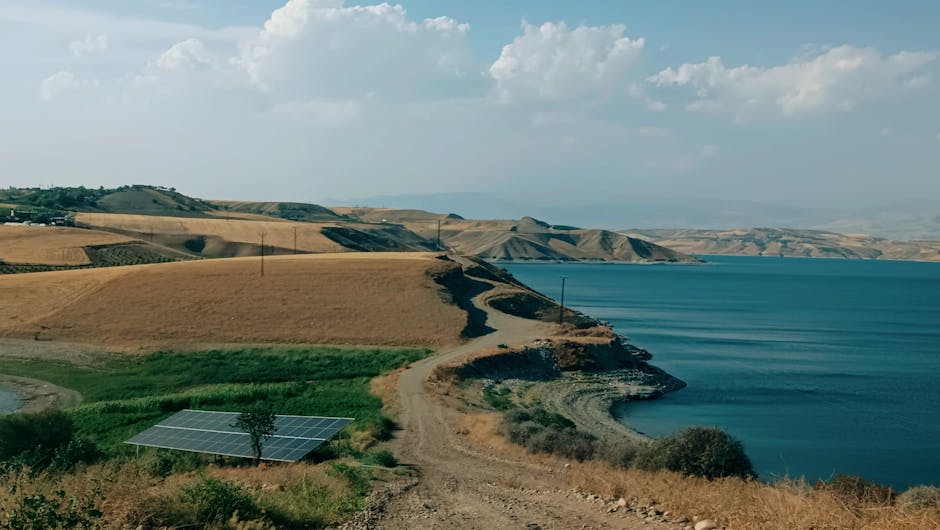
China Launches World's Largest Floating Solar Farm on Anhui Reservoir
China Three Gorges Corporation connected the world's largest floating solar installation to the grid on December 9, 2025. The 320 MW facility covers 640 hectares of a former coal mining subsidence area that flooded into a reservoir in Huainan, Anhui Province. The project cost $280 million and took 18 months to build.
The installation surpasses the previous record holder, a 150 MW floating farm in South Korea's Saemangeum reclamation zone.
Technical Design
The farm uses high-density polyethylene floats that support monocrystalline panels tilted at 12 degrees for optimal sun exposure. Water cooling naturally increases panel efficiency by 8-10% compared to ground-mounted systems, as the reservoir surface temperature keeps module temperatures below 45 degrees Celsius.
Anchoring systems use weighted cables connected to the reservoir bed at 200 points, designed to withstand wind gusts of 130 km/h during summer storm season.
Land Use Benefits
The Huainan coal mining district contains over 100 subsidence lakes totaling 20,000 hectares, created when underground mining caused surface collapse. The lakes are unsuitable for agriculture or development, making them ideal for floating solar.
"Repurposing mining scars for clean energy is poetic justice," said Dr. Wang Liping, renewable energy researcher at Tsinghua University. "It turns a liability into a productive asset while preserving farmland."
Ecological Considerations
Panel coverage is limited to 30% of the water surface to allow adequate light penetration for aquatic ecosystems. Monitoring by the Chinese Academy of Sciences found no significant change in dissolved oxygen levels or fish populations after two years of pilot operation at a smaller 40 MW test site on an adjacent lake.
Algae growth beneath panels was reduced by 40%, which local fisheries managers consider beneficial for water quality in these nutrient-rich mining lakes.
Replication Potential
China has identified 12,000 hectares of suitable subsidence lakes across Anhui, Shandong, and Shanxi provinces, with a combined floating solar potential of 6 GW. Global floating solar capacity currently stands at 4.8 GW, and BloombergNEF projects it will reach 25 GW by 2030.
Southeast Asian countries including Vietnam, Thailand, and Indonesia are exploring floating solar on irrigation reservoirs and hydropower dam surfaces, where dual-use installations can share existing grid connections.