China Curtailed 360 TWh of Solar and Wind Power in H1 2026 — Enough to Power Mexico for a Year
China and India curtailed record volumes of wind and solar power in the first half of 2026 as grid bottlenecks outpaced the region's renewable build-out, according to a new Global Energy Monitor and CREA analysis.
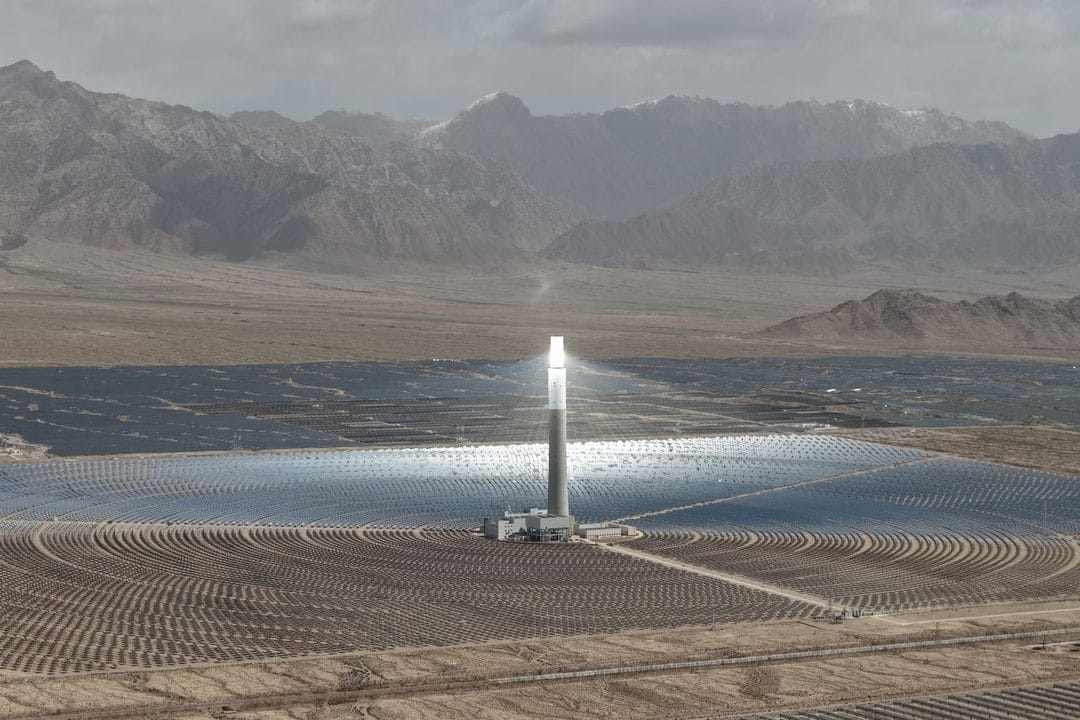
China curtailed an estimated 360 terawatt-hours of wind and solar power in the first half of 2026, up 49% from a year earlier and enough electricity to power Mexico for about a year, according to an analysis published on August 18 by Global Energy Monitor (GEM) and the Centre for Research on Energy and Clean Air (CREA). India recorded a smaller but fast-growing version of the same problem, curtailing 8.13 terawatt-hours of solar output between April and June, according to Ministry of New and Renewable Energy data submitted to Parliament. Both figures point to the same underlying issue: grids that cannot absorb electricity as fast as solar and wind farms can now generate it.
Official figures understate the scale
China's National Energy Administration, which stopped publishing monthly curtailment data by province in March, reported far lower official numbers: 8.6% of solar output and 9.1% of wind output curtailed in the first half of the year. GEM and CREA, using weather-adjusted modelling to capture curtailment the agency does not report, put the true figure at 26.1% of total wind and solar generation rejected over the same period. The National Energy Administration did not respond to a Reuters request for comment on the discrepancy.
Coal generation still rose
The curtailment came even as China's coal-fired power generation rose 3.4% year-on-year in the first half of 2026, according to the GEM analysis. The clean electricity that grids turned away exceeded the entire increase in China's power demand over the period. That detail matters: it means the country's expanding coal fleet, rather than a shortage of renewable capacity, is now the binding constraint on how much low-carbon power actually reaches consumers.
India's solar curtailment jumps in Q2
In India, the world's third-largest solar generator, the second-quarter curtailment of 8.13 TWh amounted to about 14% of the quarter's solar output, driven by transmission constraints and grid-security concerns, the renewable energy ministry told Parliament. That is a sharp jump from the January–March quarter, when combined wind and solar curtailment totalled just 0.47 TWh, according to energy think tank Ember. Ember noted that Indian solar generation is typically much higher in the April–June quarter than in the preceding one, which inflates part of the comparison, though the underlying trend still points upward.
Australia and Japan show the same pattern
The problem extends beyond China and India. Curtailment in Australia's National Electricity Market rose 37% to 2.93 TWh in the first half of 2026, about 7% of wind and solar output, according to Reuters, which cited electricity-market data. Japan's grid rejected 2.35 TWh over the same period, up 34% year-on-year and equivalent to roughly 4% of renewable generation.
Worsening curtailment is starting to reshape how renewable projects get financed, according to Shawn Shuwei Zhang, chief economist at the Beijing-based consultancy Draworld Environment Institute. Rising uncertainty over how much of a solar or wind farm's output will actually reach paying customers makes it harder "to do pre-assessment of the financial viability of projects," Zhang said.
Batteries as the near-term fix
Battery storage is emerging as the most immediate remedy. Ember analyst Kostantsa Rangelova pointed to Chile, which added 4 gigawatt-hours of battery capacity in 2025 — more than doubling its installed storage, mostly co-located with solar plants — as a model other markets could copy to absorb midday surpluses and cut curtailment rates.
For developers across the region, the shift changes the calculation behind new projects. The question is no longer how cheaply a solar or wind farm can generate power, but whether that power can reach a paying customer once it is built. Transmission expansion and battery build-out are now competing directly with coal and gas capacity for space and investment on Asia-Pacific grids that were largely designed around fossil-fuel baseload.