China EV Exports Hit 5 Million Units, Reshaping Global Auto Trade
China exports 5 million EVs in 12 months, up 42%, as Chinese automakers establish global manufacturing to navigate trade barriers.
China EV Exports Hit 5 Million Units, Reshaping Global Auto Trade
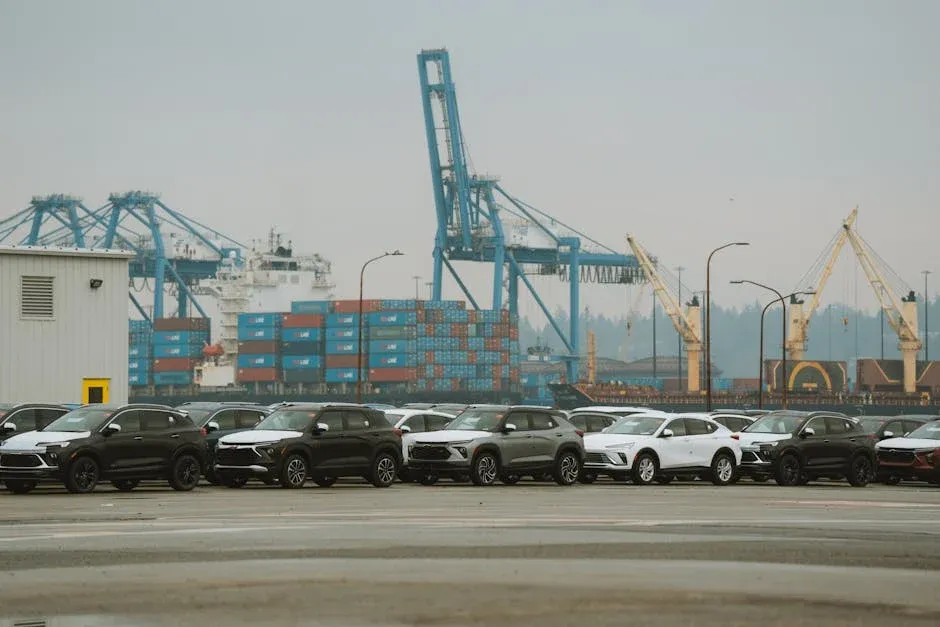
China exported 5 million new energy vehicles in the 12 months ending March 2026, cementing its position as the world's largest auto exporter. The figure, reported by China's General Administration of Customs, represents a 42% increase from 3.52 million in the prior period. Battery electric vehicles accounted for 3.4 million units, with plug-in hybrids making up the remainder.
The top export destinations were Russia (680,000), Belgium (used as EU distribution hub, 520,000), Thailand (380,000), Brazil (350,000), and the United Kingdom (280,000).
Market Disruption
Chinese EVs now compete across all segments, from BYD's $12,000 Dolphin Mini to NIO's $65,000 ET7 luxury sedan. Average export prices have risen from $15,000 to $22,000 per unit over two years, reflecting a shift toward higher-specification models.
"Chinese automakers have moved from volume to value," said Jato Dynamics analyst Felipe Munoz. "They are no longer just selling cheap cars — they are selling competitive products at every price point."
Trade Barriers
The EU's 35.3% countervailing tariff on Chinese EVs, in effect since October 2024, slowed but did not stop sales growth. Chinese brands responded by establishing final assembly operations in Hungary, Turkey, and Spain to qualify for lower tariff rates.
The United States maintains a 100% tariff on Chinese EVs, effectively blocking direct sales. However, Chinese components — particularly batteries, motors, and power electronics — are present in 30% of EVs sold by Western brands in the US market.
Overseas Manufacturing
BYD is building factories in Thailand, Brazil, Hungary, Indonesia, and Mexico. SAIC operates assembly plants in Thailand and India. Great Wall Motor has facilities in Thailand and Bulgaria. These overseas plants will collectively produce an estimated 2 million units annually by 2028.
Local production circumvents tariffs, creates jobs in host countries, and reduces logistics costs. It also addresses growing concerns about geopolitical supply chain concentration.
Environmental Paradox
While Chinese EV exports accelerate the global transition away from internal combustion engines, the carbon footprint of manufacturing — particularly coal-heavy electricity grids powering Chinese factories — complicates the sustainability narrative.
The lifecycle carbon advantage of a Chinese-made EV over an ICE vehicle is estimated at 40-60%, compared to 65-80% for an EV produced in Norway or France where grid electricity is cleaner. Chinese automakers are investing in factory-level renewable energy to close this gap.