Australia Trials Direct Air Capture at Scale in South Australia
Australia's first commercial direct air capture plant begins operations near Port Augusta, capturing 10,000 tons of CO2 annually using solar-powered sorbents.
Australia Trials Direct Air Capture at Scale in South Australia
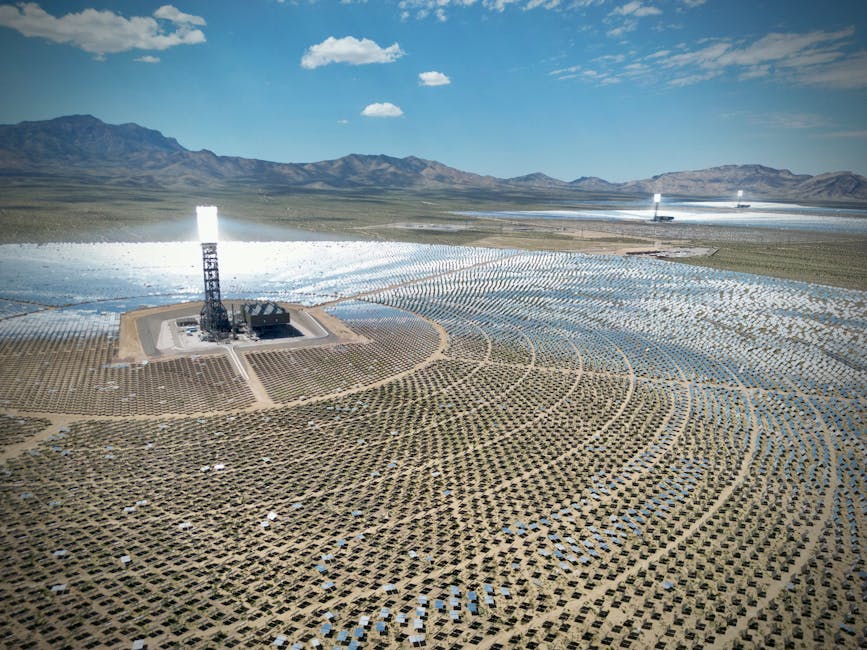
Southern Green Gas and Aspira DAC began operations at Australia's first commercial-scale direct air capture facility near Port Augusta, South Australia on March 24, 2026. The plant captures 10,000 tons of CO2 per year directly from ambient air using solid sorbent technology powered by a co-located 30 MW solar farm.
While modest in scale compared to point-source capture from industrial facilities, the project represents Asia-Pacific's first operational DAC plant and a milestone for negative emissions technology.
Technology and Process
The facility uses modular contactor units containing amine-functionalized solid sorbents that bind CO2 from air at ambient temperature. When heated to 100 degrees Celsius using concentrated solar thermal energy, the sorbents release captured CO2 at 95% purity. The sorbent material can undergo 5,000 capture-release cycles before replacement.
Captured CO2 is compressed and injected into deep saline aquifer formations 2,000 meters below the surface, where it mineralizes over time into stable carbonate rock.
Cost Reality
Current capture costs at the Port Augusta facility are approximately $380 per ton of CO2, well above the $100-150 target needed for broad commercial viability. Aspira DAC projects costs will decline to $200 per ton by 2030 as sorbent efficiency improves and manufacturing scales.
"Direct air capture today is where solar panels were in 2005 — expensive but on a clear cost reduction trajectory," said CEO Jennifer Holmgren. "Learning-by-doing at commercial scale is the only way to drive costs down."
Carbon Credit Market
The 10,000 tons of captured CO2 will generate permanent carbon removal credits, sold to corporate buyers including Microsoft, Stripe, and Swiss Re at contracted prices of $400-600 per ton. These premium credits serve companies seeking verifiable permanent carbon removal rather than temporary offsets.
Australia's Clean Energy Finance Corporation provided $35 million in concessional finance for the project, supplemented by $20 million from the federal government's Carbon Capture Technology Fund.
Scaling Path
Aspira DAC plans a 100,000-ton facility at the same site by 2029, leveraging South Australia's abundant solar resources and suitable geology. The global DAC pipeline, led by Climeworks in Iceland and 1PointFive in Texas, targets 10 million tons of annual capture by 2030.
Scientists emphasize that DAC is not a substitute for emissions reduction but a complement — necessary for removing historical emissions and offsetting hard-to-abate sectors. The Intergovernmental Panel on Climate Change estimates that 6-10 billion tons of annual carbon removal will be needed by 2050 to meet 1.5-degree targets.