Asia's Heat Pump Race: How Japan, South Korea and China Are Pulling Ahead on Adoption
Government programmes and manufacturing scale in Japan, China and South Korea are pushing the region ahead of Europe and North America on heat pump adoption.
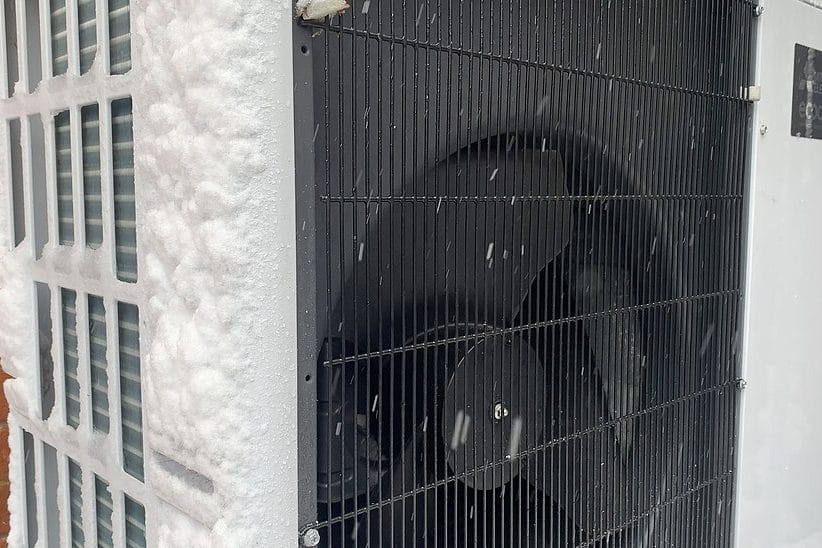
Japan, China and South Korea have emerged as the world's fastest-moving markets for heat pump adoption, according to energy trackers monitoring the shift away from fossil-fuel heating across Asia. Across all three countries, subsidy programmes, coal-to-electricity conversion schemes and rising demand for efficient cooling have pushed households and building owners toward compression-based heating and hot water systems faster than in Europe or North America.
The region's manufacturing base has amplified that domestic momentum. Together, companies headquartered in the three countries now account for a substantial share of global heat pump production, giving Japan, China and South Korea both a head start on adoption at home and growing leverage as exporters into markets that are only beginning to scale up.
China's Manufacturing Scale Meets a Decade-Long Coal Conversion Drive
China's National Development and Reform Commission has overseen a coal-to-electricity and coal-to-gas heating conversion programme since 2017, initially concentrated in Beijing, Tianjin and surrounding Hebei province, that has steadily replaced household coal-fired boilers with electric heat pumps and gas systems to cut winter smog. Meanwhile, manufacturers including Midea, headquartered in Foshan, and Gree, based in Zhuhai, have expanded heat pump production lines to serve that domestic conversion push alongside a surge in export orders from European buyers seeking alternatives to Russian gas since 2022.
Separately, Chinese heat pump exports have grown fast enough that European industry groups have flagged the country as an increasingly dominant supplier of both residential and commercial units — a pattern that echoes China's earlier rise in solar panel and battery manufacturing. The move comes after years of provincial-level subsidies stacked on top of the national conversion programme, which together lowered the upfront cost gap between heat pumps and the coal boilers they replaced.
That export growth has not gone unnoticed in Brussels. European policymakers who spent much of the past two years debating tariffs on Chinese electric vehicles and solar panels have begun asking similar questions about heat pump imports, weighing energy security gains from cheaper equipment against concerns about domestic manufacturers losing market share. So far, no formal tariff decision on heat pumps has been announced, and Chinese suppliers continue to fill a large share of European orders in the meantime.
Japan's Mature Market Keeps Setting the Efficiency Bar
Japan's heat pump market predates the current global push by roughly two decades. Starting in the early 2000s, utilities and appliance makers introduced CO2-refrigerant heat pump water heaters, marketed under the Eco Cute name, and the technology has since become a standard fixture in new housing across much of the country. Daikin, the Osaka-based air conditioning manufacturer, along with Mitsubishi Electric and Panasonic, continue to refine cold-climate performance for the Hokkaido and Tohoku markets, where winter temperatures once made heat pumps a harder sell than kerosene or gas heating.
That refinement has followed a long run of efficiency mandates from Japan's Ministry of Economy, Trade and Industry. Its Top Runner programme has periodically raised minimum performance standards for air conditioners and water heaters since the 1990s, pushing manufacturers toward incremental engineering gains rather than a single technological leap — a slower but steadier path than the subsidy-driven surges seen elsewhere in the region.
South Korea Ties Adoption to Its 2050 Carbon Neutrality Law
South Korea's Carbon Neutrality and Green Growth Framework Act, which took effect in 2022, set a legally binding target of net-zero emissions by 2050 and has since anchored a series of subsidy schemes administered through the Korea Energy Agency to encourage households and building owners to replace oil and gas boilers with heat pump systems. At the same time, LG and Samsung, both already established in home appliances, have expanded their heat pump product lines for the domestic replacement market as well as for export customers in Europe and North America.
According to industry associations tracking the sector, hybrid systems that pair a heat pump with a backup gas boiler have gained particular traction in South Korea's colder northern regions, where all-electric systems have historically struggled to match gas heating on running cost during peak winter demand. That hybrid approach has become something of a middle path for a country balancing its carbon targets against household energy bills.
Reversible units capable of both heating and cooling have also found a natural market in South Korea's apartment-dominated cities, where a single system replacing separate air conditioners and gas boilers appeals to building owners managing tight mechanical space. In pitching commercial-scale systems to buyers in Southeast Asia and the Middle East, LG's and Samsung's export divisions have leaned on that dual-function design — markets where cooling demand rather than winter heating is the primary driver of adoption.
The three markets arrived at their current position by different routes — China through industrial policy and manufacturing scale, Japan through decades of incremental engineering, South Korea through a legally binding climate law — but the result is a region that international energy analysts have repeatedly cited as outpacing Europe and North America on recent heat pump sales growth, even as European uptake cooled after its post-2022 surge. Whether that lead holds will depend partly on how quickly grid capacity and electricity pricing across the three countries adjust to a heating and cooling load that is shifting, unit by unit, from combustion to compression.