How Asia's Cities Sort Household Waste — And Why the Rules Never Match Next Door
Tokyo, Seoul, Taipei and Shanghai each built their own household waste-sorting system for their own reasons — and almost none of the rules carry over from one city to the next.
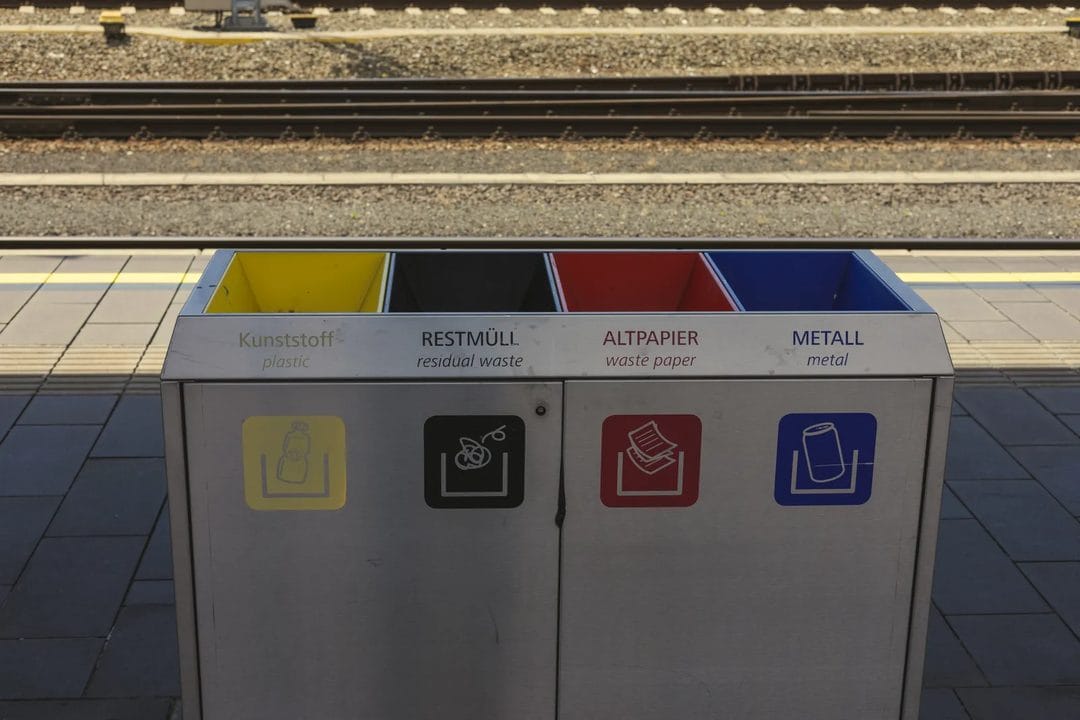
Move an apartment from Shibuya to Shinjuku — two wards that share a subway line and a border — and the rules for what goes in which bag change completely. One ward wants food scraps burned with the general trash; the neighbouring one wants them bagged separately for composting. Multiply that kind of variation across a continent that runs from Tokyo's 23 wards to Shanghai's 16 districts to Seoul's pay-per-bag system, and it becomes clear why so many residents — locals included — get it wrong for months before they get it right. City hall websites publish PDF calendars that run to a dozen pages, apartment lobbies pin up laminated cheat sheets in three languages, and none of it fully prevents the same rejected bag from sitting on the curb week after week until someone finally asks a neighbour directly.
Why Asia's Sorting Systems Don't Look Anything Alike
There's no single "Asian model" for household waste, and treating the region as one system is the first mistake most newcomers make. Japan built its rules around incineration capacity and a cultural expectation of precision; South Korea built its around a volume-based fee that makes throwing away more of anything cost real money; Taiwan built its around a truck that comes to your street corner rather than a bin that sits outside your door; mainland China, starting from Shanghai in July 2019, built its around a legal mandate with real fines attached. None of these grew out of a shared regional standard — each city solved its own landfill, incineration, or political problem, and the sorting categories are a side effect of that history rather than a deliberate attempt at consistency.
That matters practically, not just historically. A resident who masters Tokyo's system and then moves to Seoul will find that almost none of the muscle memory transfers — not the collection days, not the bag types, not even the basic logic of what counts as "recyclable." Assuming otherwise is how a perfectly conscientious person ends up with a fine, a rejected bag left on the curb with a warning sticker, or a neighbour's polite but pointed comment through a shared building group chat.
Tokyo: Where the Calendar Decides What You Throw Away
Tokyo doesn't run one waste system — it runs 23, one per ward, and each ward publishes its own calendar. The broad categories are consistent enough to describe: moeru gomi (burnable — food waste, paper that can't be recycled, small wood items), moenai gomi (non-burnable — ceramics, small metal items, some plastics depending on the ward), shigen (recyclables — PET bottles, cans, glass, cardboard, sorted separately from each other), and sodai gomi (oversized items, which require a paid sticker bought in advance and a scheduled pickup). Shibuya collects burnable trash twice a week and recyclables once; Shinjuku's schedule runs on a different rotation entirely, and neither ward's calendar transfers to the other.
PET bottles are where most people trip up first. The bottle body goes in one bin, the cap goes in another, and the label — which has to be peeled off, not just loosened — goes into a third stream as plastic packaging. Skip that step and a bag can sit uncollected with an orange rejection sticker on it, sometimes for a full week until the next scheduled pickup. Crows are the other recurring problem: burnable trash left in a standard bag gets torn open overnight, which is why most wards require a yellow, semi-transparent net cover over the bags at the collection point rather than leaving them exposed.
Seoul: Pay by the Bag, Even for Food Scraps
South Korea's jongnyangje — the volume-based waste fee system introduced nationwide in 1995 — remains one of the more effective policy levers in the region precisely because it attaches a price to carelessness. General waste has to go into a district-specific regulation bag, sold at any convenience store or supermarket, with prices scaled to size: a 20-litre bag runs somewhere around 490 KRW in most Seoul districts, and using an unofficial bag means the collectors simply leave it on the curb. Food waste is separate again, and in newer apartment complexes it's weighed electronically — an RFID-tagged bin scans a resident's card, weighs the scraps, and charges by the gram, typically a few dozen won per 100 grams.
Recommend the RFID food-waste bins to anyone moving into a Seoul apartment complex that has them: they're more expensive per use than a flat-rate bag, but they cut down on the smell and pest problems that come from letting scraps sit in a shared bin for days. Skip the temptation to just double-bag general waste and hope nobody checks the closure — building supervisors in most complexes do spot-check, and repeat offenders on a shared floor can end up named in the building notice board.
Taipei: The Truck Comes to You, and It's Playing Beethoven
Taipei runs the most distinctive system on the list. There are no bins waiting on the curb. Instead, residents bring their trash and recycling directly to a collection truck that stops at a fixed corner on a fixed schedule — usually twice a day, six days a week — announced by music playing from speakers mounted on the truck, most often Beethoven's "Für Elise" or Tekla Bądarzewska's "A Maiden's Prayer." Miss the truck and the bag stays in your kitchen until the next round.
The system sounds inconvenient on paper. In practice it's the reason Taiwan's household recycling rate sits among the highest in the world, reported at well above 50% in recent years, up from a landfill-dependent system with almost no diversion before the mid-1990s. Regulation trash bags are sold by volume and cost money, exactly as in Seoul, which gives every household a direct financial reason to sort recyclables and food waste out of the general stream before that truck arrives. Food scraps in Taipei go into a third stream entirely, historically tied to a pig-feed recycling program that still operates in modified form today.
Shanghai: Sorting Went From Optional to Enforced Overnight
Shanghai's mandatory four-category system — wet waste (湿垃圾), dry waste (干垃圾), recyclables (可回收物), and hazardous waste (有害垃圾) — took effect on 1 July 2019 and changed the city's daily rhythm almost immediately. Buildings that once had trash chutes on every floor had many of them welded shut, replacing them with staffed sorting stations open only during set morning and evening windows, sometimes with a volunteer or building employee standing there checking bags by hand. Individuals caught sorting incorrectly can be fined up to 200 RMB; companies and institutions face penalties running into the tens of thousands.
It worked faster than most observers expected, and it also produced genuine confusion that never fully went away — a fact worth sitting with rather than smoothing over. A chicken bone, for instance, counts as dry waste rather than wet waste under the official guidance, because it's too hard to decompose quickly — which contradicts the instinct most residents had that anything food-related belongs in the wet stream. Apps like Shanghai's official waste-sorting mini-program exist specifically to answer these edge cases, and even five years after the mandate, residents still open them mid-argument in the kitchen.
The One Assumption Worth Dropping
It's tempting to assume that the cities with the strictest-looking rules — mandatory categories, fines, staffed checkpoints — are automatically the ones recycling the most material, and that cities with a lighter touch are falling behind. Singapore breaks that assumption cleanly. Streets are spotless, enforcement of littering laws is famously strict, and the city's reputation for order suggests a correspondingly rigorous recycling culture. Yet Singapore's domestic recycling rate has hovered around 12–13% in recent years, well below Taipei's or Seoul's, largely because its household system relies on a single comingled blue recycling bin with no financial penalty for getting it wrong, and because roughly 60% of the country's waste is incinerated rather than diverted. A clean street and a well-sorted waste stream turn out to be two entirely different achievements, and conflating them is one of the more common outsider mistakes in reading how these cities actually function.
The Mistakes Everyone Makes First
New residents — and plenty of long-time ones — tend to repeat the same handful of errors across every city on this list:
- Labels left on PET bottles or food residue still in containers — either one gets an entire bag rejected rather than partially accepted in most of these systems
- Food waste and general waste get treated as one category, when nearly every city here separates them, often with different collection days or different bins entirely
- Missing the collection window, particularly in Taipei, where there's no fallback bin to catch what the truck didn't take
- The wrong bag altogether — a generic trash bag instead of the district-specific regulation bag in Seoul, or an undersized sticker for an oversized item in Tokyo
- No one checks the local ward, district, or building rules at all, on the assumption that a system learned in one city will hold up in the next one — it usually doesn't, and the fine or rejected bag is the first proof of that
What to Set Up in the First Week
Anyone relocating within the region should treat waste sorting as a first-week administrative task, not something to figure out gradually. Find the building or ward-specific calendar before the first collection day arrives — in Tokyo and Shanghai this usually means asking the building management office directly, since online guidance often defaults to a neighbouring ward's rules. Buy the correct regulation bags immediately in Seoul or Taipei rather than using whatever's left over from a previous city; convenience stores stock them, and staff will usually point out the right one if asked. Download the local sorting app if one exists — Shanghai's mini-program and several Seoul district apps both let you search an item by name and get an instant category, which beats guessing on collection morning with a bag already tied shut. And keep three separate bins or bags in the kitchen from day one rather than sorting everything at the door on the way out, because retroactively pulling a yogurt pot out of a bag full of food scraps is a worse way to spend a Tuesday evening than most people expect.